

Commercial Energy Storage System Supplier Checks for Factory and Solar Project Buyers

Commercial Energy Storage System Supplier Checks for Factory and Solar Project Buyers
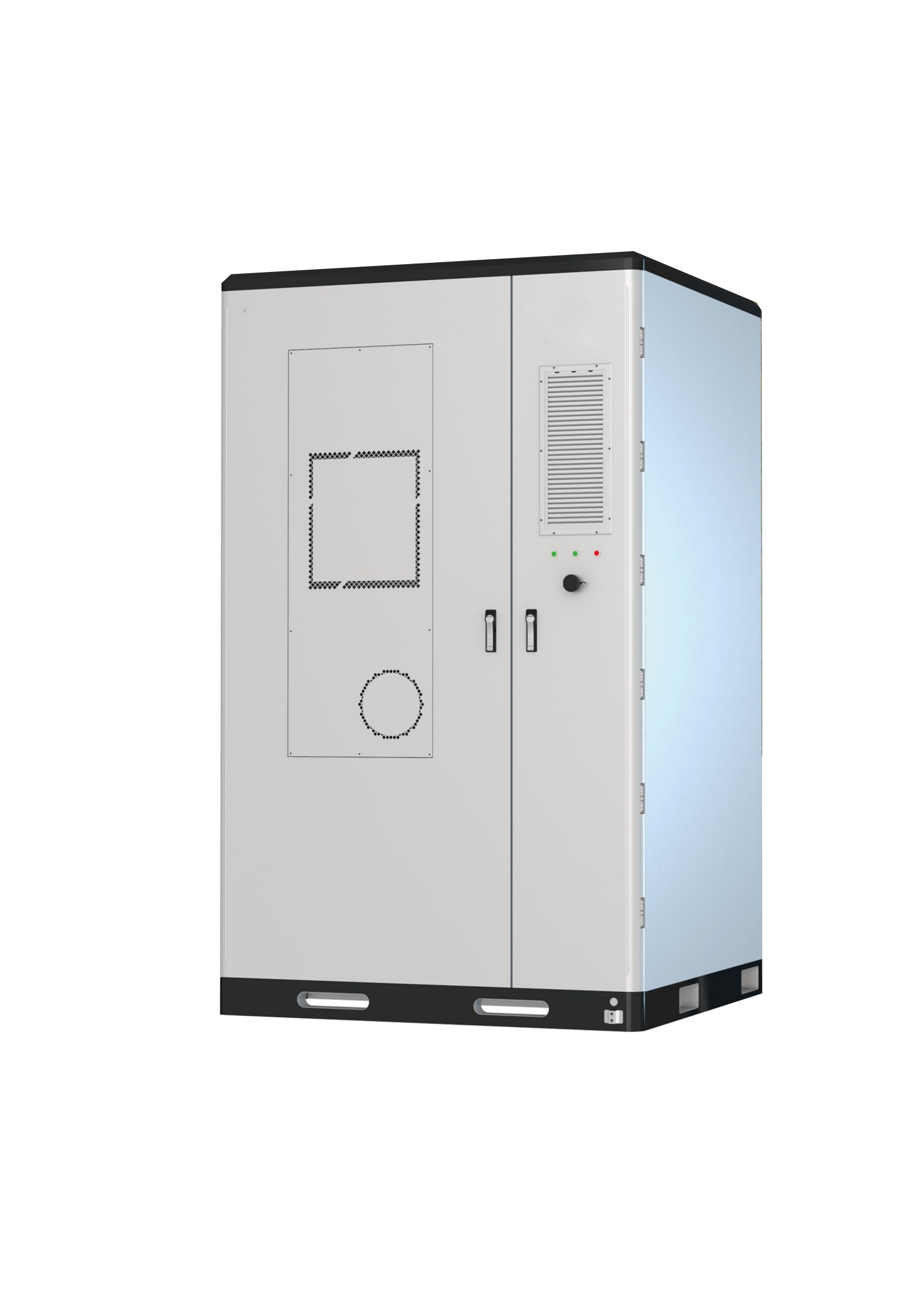
A buyer searching for a commercial energy storage system supplier usually needs more than a cabinet price. The project may involve a factory backup route, a solar-plus-storage site, weak-grid support, or a commercial facility that needs a repeatable file for electrical review. For AilumPower, the first product to review is the Commercial and Industrial ESS with model HZ1241100AO on-grid configuration, 100kW rated AC power, and 241kWh battery rated energy. High-voltage rack modules and liquid cooling modules should be discussed only after the cabinet role is clear.
The first thing to confirm is whether the buyer wants a complete commercial ESS cabinet, a battery module route for system integration, or both. A supplier review becomes confusing when “ESS” is used for the full cabinet, a rack module, and a project package in the same quotation.
Commercial energy storage system supplier evidence begins with HZ1241100AO
The AilumPower Commercial and Industrial ESS page gives a useful starting file for supplier evaluation because it names a real cabinet route instead of speaking only in general storage language. The HZ1241100AO on-grid cabinet lists 241kWh battery rated energy, 768V rated battery voltage, and a 696-852V battery voltage range. It uses LFP battery type, 314Ah battery energy, and a 1P240S configuration. The same page lists 100kW rated AC power, 110kW maximum power, 160A maximum current, and 400V rated AC voltage.
Those values let a factory buyer separate a real commercial cabinet discussion from a loose battery request. If the project needs a 100kW class AC route, the buyer should keep AC power, voltage range, grid connection, battery energy, and cabinet role in one document. If the site only needs small residential backup, the HZ1241100AO route is probably too large and a wall, rack, stacked, or mobile lithium battery product should be reviewed separately.
Factory backup buyers should connect 241kWh energy with 100kW AC power
A factory backup buyer may focus first on energy capacity, but the AC side decides how the system will interact with real loads. The AilumPower cabinet lists rated AC power of 100kW, maximum power of 110kW, and THDI below 3%. It also lists power factor of at least 0.99 or -1 to 1, THDU below 3%, maximum efficiency of 98.5%, and energy cycle efficiency of at least 90%. These values belong in the technical review file because they shape how engineers compare the storage cabinet with the site’s load profile and grid conditions.
Solar-plus-storage buyers should ask whether they need a cabinet or modules
A solar EPC buyer may mention commercial storage but actually need one of two routes. One route is the complete Commercial and Industrial ESS cabinet. The other route is a battery module supply discussion for a system integrator building the cabinet around separate components. AilumPower has high-voltage rack-mounted module pages and a liquid cooling high-voltage module page, but those pages should not replace the cabinet review unless the buyer is deliberately managing integration responsibility.
High-voltage rack modules change a commercial energy storage system supplier review
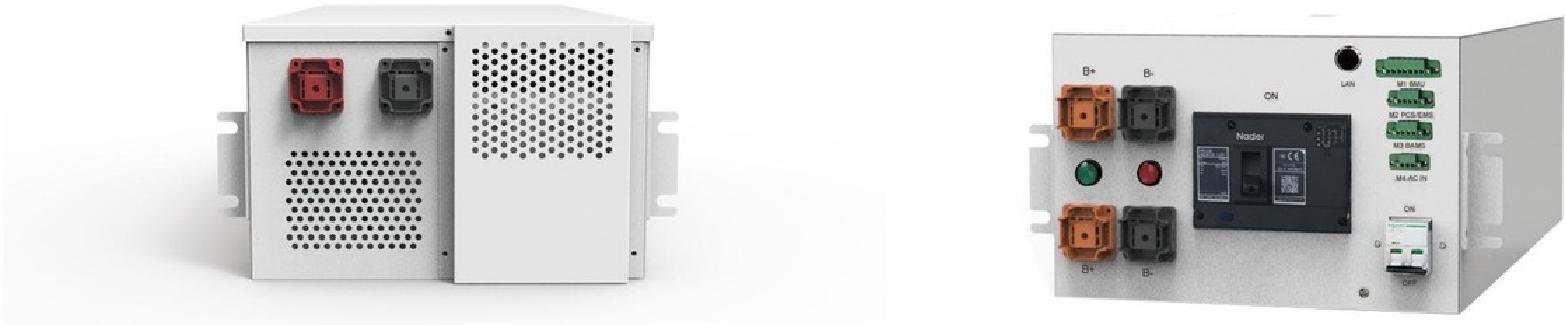
The 25.6V/48V/51.2V High Voltage Rack-Mounted Lithium Battery Module page gives 48V100Ah, 51.2V100Ah, and 25.6V200Ah module options, with nominal energy of 4800Wh, 5120Wh, and 5120Wh. Usable energy is listed as 4320Wh, 4608Wh, and 4608Wh. The page also lists RS485/CAN communication, design life of 10 years or more, and charge/discharge voltage ranges of 42.75-53.25V, 45.6-56.8V, and 22.8-28.4V.
These module details are useful when the buyer is evaluating a storage module supplier, but they do not answer every commercial ESS question by themselves. A full cabinet includes power conversion, AC-side behavior, system control, protection, cooling, and integration responsibility. A module order needs a clear owner for cabinet design, BMS/EMS coordination, wiring, safety review, and later service.
Liquid cooling module supply needs a clear thermal reason
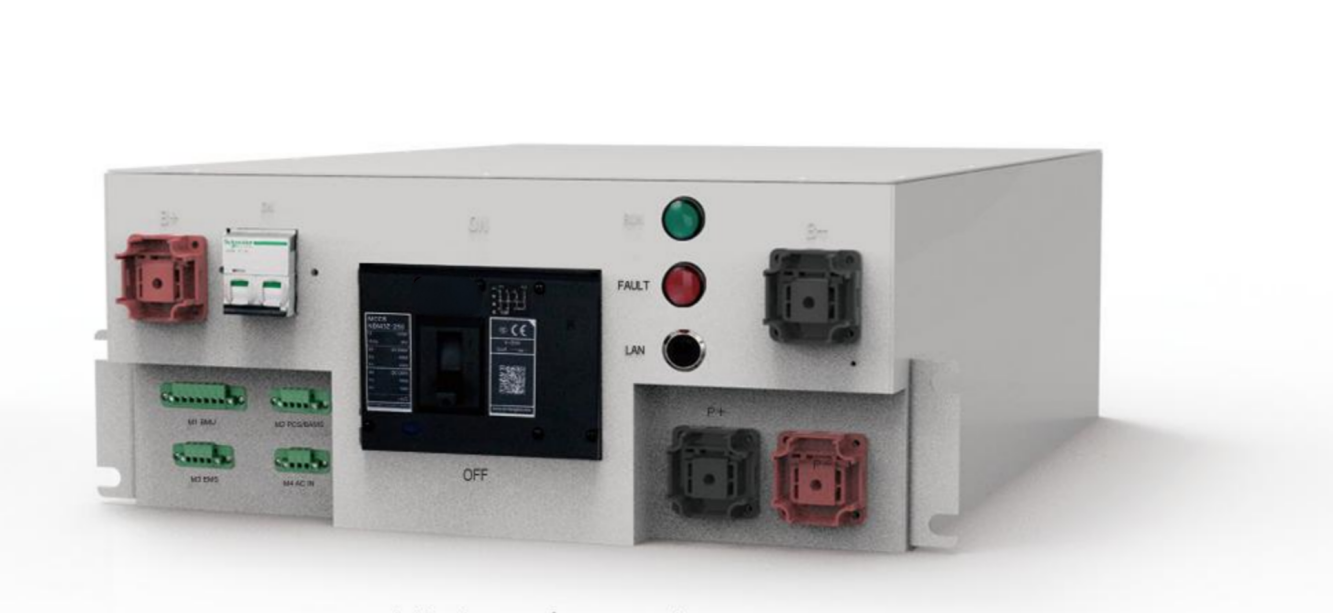
The Liquid Cooling High Voltage Rack-Mounted Lithium Battery Module page gives 153.6V280Ah and 166.4V314Ah routes, with nominal energy of 43008Wh and 52249.6Wh. Usable energy is listed as 38707.2Wh and 47024.64Wh. The page also lists RS485/CAN communication, at least 6000 cycles at 25C, and a 136.8-170.4V charge/discharge voltage range. A buyer should treat these as higher-capacity module options that require a real thermal and cabinet reason.
Liquid cooling should not be added to a supplier conversation just because it sounds more advanced. It belongs where repeated operation, cabinet density, thermal stability, or project conditions justify the added complexity. If the commercial site is small and the storage route is simple, ordinary rack modules or a complete commercial cabinet may be easier to purchase and service.
Commercial energy storage system supplier comparisons should separate cabinet and module buying
| Buyer route | AilumPower page to review | Useful product evidence | When it is not the right route |
|---|---|---|---|
| Complete factory or solar-site cabinet | Commercial and Industrial ESS | HZ1241100AO, 100kW AC, 241kWh, 768V rated battery voltage | Not for small wall-mounted or home backup orders |
| High-voltage module supply for integration | 25.6V/48V/51.2V High Voltage Rack Module | 48V100Ah, 51.2V100Ah, 25.6V200Ah, RS485/CAN | Not a complete cabinet unless integration owner is defined |
| Higher-capacity 51.2V module route | 51.2V High Voltage Rack Module | 51.2V280Ah and 51.2V314Ah, 14336Wh and 16076.8Wh nominal energy | Not needed when low-voltage residential storage is enough |
| Thermal-stability module route | Liquid Cooling High Voltage Module | 153.6V280Ah and 166.4V314Ah, 43008Wh and 52249.6Wh nominal energy | Not the simplest choice for low-density or simple backup systems |
Supplier documents for a 100kW 241kWh ESS should not stop at a price sheet
Procurement guides for battery energy storage systems generally emphasize scope, technical requirements, safety review, commissioning, documentation, and long-term operation. For an AilumPower commercial cabinet discussion, the buyer should request a technical file that keeps product model, battery energy, AC power, voltage range, cooling route, BMS/EMS responsibilities, communication route, cabinet environment rating, and delivery scope together. The AilumPower cabinet page lists IP54 protection, C3 default anticorrosion level, and optional C4/C5. Those values should be recorded when the installation environment is humid, coastal, dusty, or exposed.
A buyer should also ask what is included in the supply boundary. If the supplier is providing a cabinet, the review should include the cabinet’s rated AC power and grid parameters. If the buyer is sourcing modules, the review should include the module voltage, capacity, communication, weight, dimensions, and who will assemble and approve the cabinet. The risk is not that one route is better than another. The risk is approving a quotation without knowing which route is being purchased.
Commercial ESS receiving checks should match the approved route
When the goods arrive, the receiving team should not record everything as “battery storage.” For a complete HZ1241100AO cabinet order, the label, cabinet condition, accessories, and shipping documents should match the cabinet scope. For a high-voltage rack module order, the module model, capacity, communication route, and physical condition should be checked against the approved list. For liquid cooling modules, cooling-related parts and handling notes should stay with the product record.
Repeat commercial storage orders should keep the old technical file visible
A repeat buyer should compare the new order with the previous project file before approving substitutions. A change from a 100kW 241kWh cabinet to a module-only route, or from ordinary high-voltage modules to liquid cooling modules, should be a deliberate engineering decision. If the reason is unclear, the buyer should pause the order until the project team explains the change in cabinet responsibility, thermal requirement, or service plan.
Factory and solar buyers should read delivery scope before price comparison
Price comparison becomes fair only after the buyer knows what the supplier is actually delivering. A complete HZ1241100AO cabinet order should be compared with another complete cabinet route, not with a battery-module-only supply. A high-voltage module order should be compared with another module route where the buyer or system integrator owns the rest of the cabinet work. If the buyer compares a full commercial ESS cabinet with a module list, the lower price may simply mean that important work has moved outside the quotation.
A solar-plus-storage EPC buyer should also separate equipment price from project risk. A module-only order can make sense when the integrator already controls cabinet design, PCS selection, BMS/EMS integration, protection, and commissioning. It is weaker when the buyer expects the supplier to answer cabinet-level performance questions after purchasing only modules. A factory buyer with limited electrical staff may prefer a more complete cabinet route because it reduces the number of parties responsible for the final system.
Cabinet accessories and module cartons should be checked differently
Receiving a commercial ESS cabinet is not the same as receiving rack battery modules. A cabinet delivery record should show the cabinet model, cabinet exterior condition, accessory list, AC-side information, and project documents. A module delivery record should show module model, capacity, voltage route, communication route, and carton condition. If both types of goods are delivered to one site, the receiving team should store cabinet records and module records separately so later service work does not confuse the scope.
For a repeat order, the buyer should ask whether the same product route, voltage range, communication route, and cooling approach are being repeated. If the new shipment changes from a 51.2V high-voltage module to a liquid cooling module, or from module supply to a complete cabinet, that change should appear clearly in the technical and commercial file before production proceeds.
AilumPower storage pages to review before supplier approval
View 25.6V/48V/51.2V Module
View 51.2V High Voltage Module
View Liquid Cooling Module
Read Commissioning Guide
When a commercial ESS supplier shortlist is ready to move forward
A factory or solar project buyer is ready to move forward when the storage role, product route, technical file, receiving checks, and service responsibility all describe the same system. If the project is a 100kW class cabinet, the HZ1241100AO data should be central. If it is a module supply project, the high-voltage module data should be central, and the cabinet integrator must be identified. If liquid cooling is requested, the thermal reason should be written down. That is the difference between a supplier shortlist that looks good on paper and one that can survive engineering review.
Solar project buyers should map ESS cabinet data to site responsibility
A solar project buyer should connect the commercial ESS supplier review with the project owner, installer, and service team. The HZ1241100AO cabinet data can support a strong storage discussion, but the site file still needs to state who checks the AC connection, who confirms the battery voltage route, who records BMS/EMS communication, and who accepts the cabinet after delivery. Without those roles, a technically suitable cabinet can still create disputes during commissioning.
For a factory that is adding storage to an existing electrical room, the buyer should also check space, access, ventilation or cooling expectations, corrosion environment, and future maintenance access before treating the cabinet as a simple product purchase. AilumPower’s IP54 and C3 default corrosion statement gives a starting point, while harsher environments should push the buyer to ask whether C4 or C5 is needed for the specific site.
The final supplier file should also state whether the project will repeat this same cabinet later. If repeat orders are likely, the buyer should keep the approved voltage range, AC output, cabinet environment note, and module route in a reusable record.
That record also helps purchasing compare future supplier offers without losing the original engineering reason.