

Get quote
Get Free Consultation!
We are ready to answer right now! free consultation.
Email:ttxxkj888@gmail.com
A buyer comparing a battery energy storage system manufacturer should first decide whether the project needs a complete commercial cabinet, a residential wall pack, a rack-mounted lithium battery, a stacked expandable system, a mobile battery, or high-voltage modules for integration. AilumPower’s storage range covers all of those routes, but they should not be placed in one undivided quotation. The correct product family depends on cabinet space, installation format, service access, communication route, and project scale.
The first question is simple: who will own the system integration? If the buyer wants a finished commercial ESS cabinet, the Commercial and Industrial ESS page is the starting point. If the buyer is a distributor stocking storage products, the wall, rack, stacked, and mobile lithium battery pages need a separate comparison file.
A manufacturer review is stronger when the buyer can see how the product family is divided. AilumPower’s Commercial and Industrial ESS is a 100kW, 241kWh class cabinet route for factories, solar storage projects, and commercial backup. The 48V Wall Mounted Lithium Battery Pack is a compact residential and light-commercial route. The 48V and 51.2V Rack Mounted Lithium Battery Packs belong in cabinet and equipment-room installations. The Stacked Lithium Battery Pack answers expansion-oriented home or small-business backup. The 51.2V Mobile Lithium Battery Pack fits temporary or movable backup power.
These are not just marketing categories. Each route changes installation labor, packaging checks, service records, and replacement logic. A buyer who sends one request for “battery storage system” may receive products that are technically valid but operationally mismatched.
A distributor may need several storage families on the shelf: 48V wall packs for compact solar backup, 48V rack packs for cabinet installers, 51.2V rack packs for 16-cell lithium routes, stacked systems for expandable home storage, and mobile units for temporary backup. An EPC buyer working on a factory project may need only one commercial ESS cabinet route. The manufacturer review should separate those two buyer types before price comparison begins.
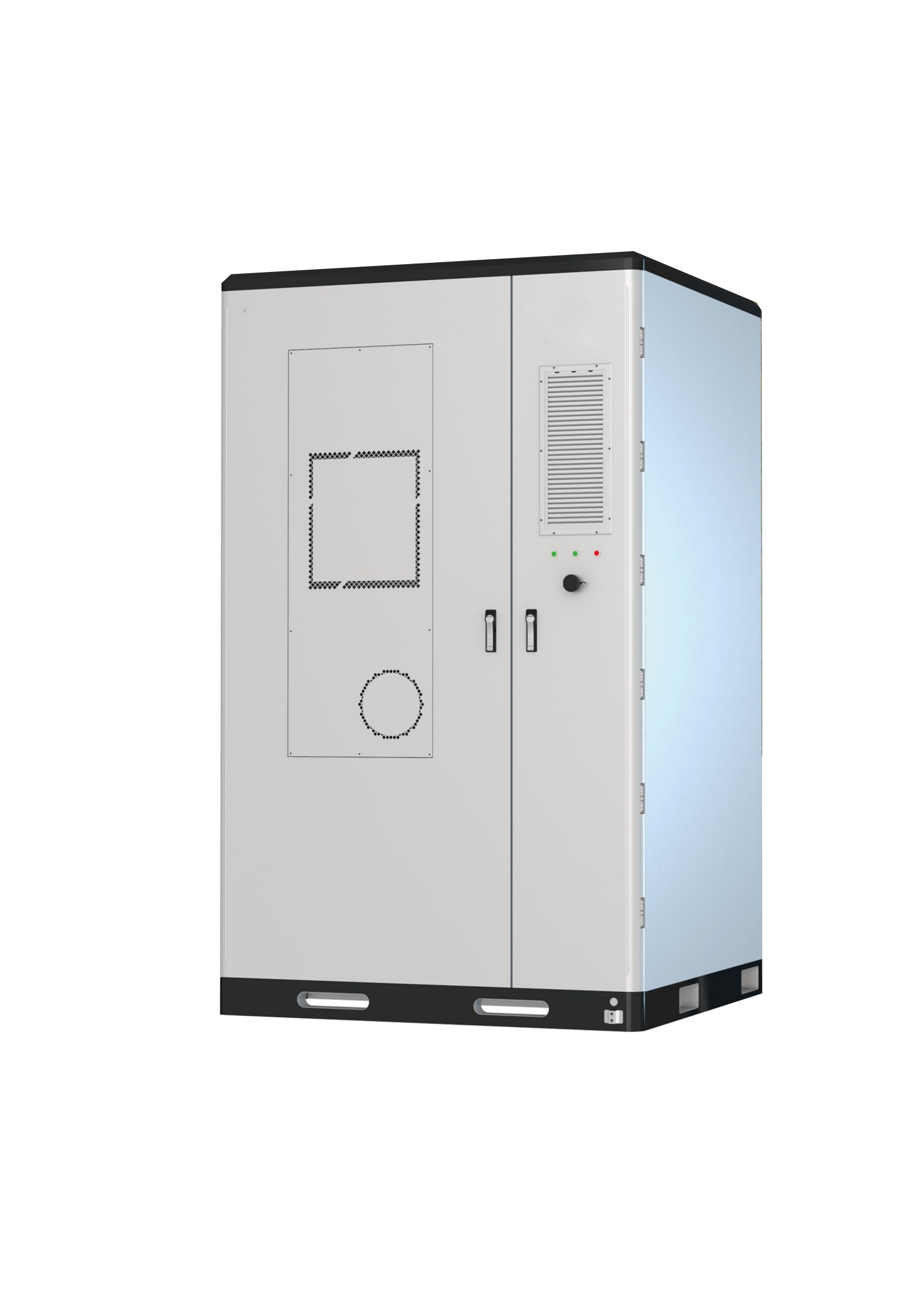
AilumPower’s Commercial and Industrial ESS lists model HZ1241100AO, 241kWh battery rated energy, 768V rated battery voltage, 696-852V battery voltage range, LFP battery type, 314Ah battery energy, 1P240S configuration, 100kW rated AC power, and 110kW maximum power. That is a commercial project discussion. It should include AC-side requirements, grid connection, cooling, BMS/EMS coordination, environment rating, and site responsibility.
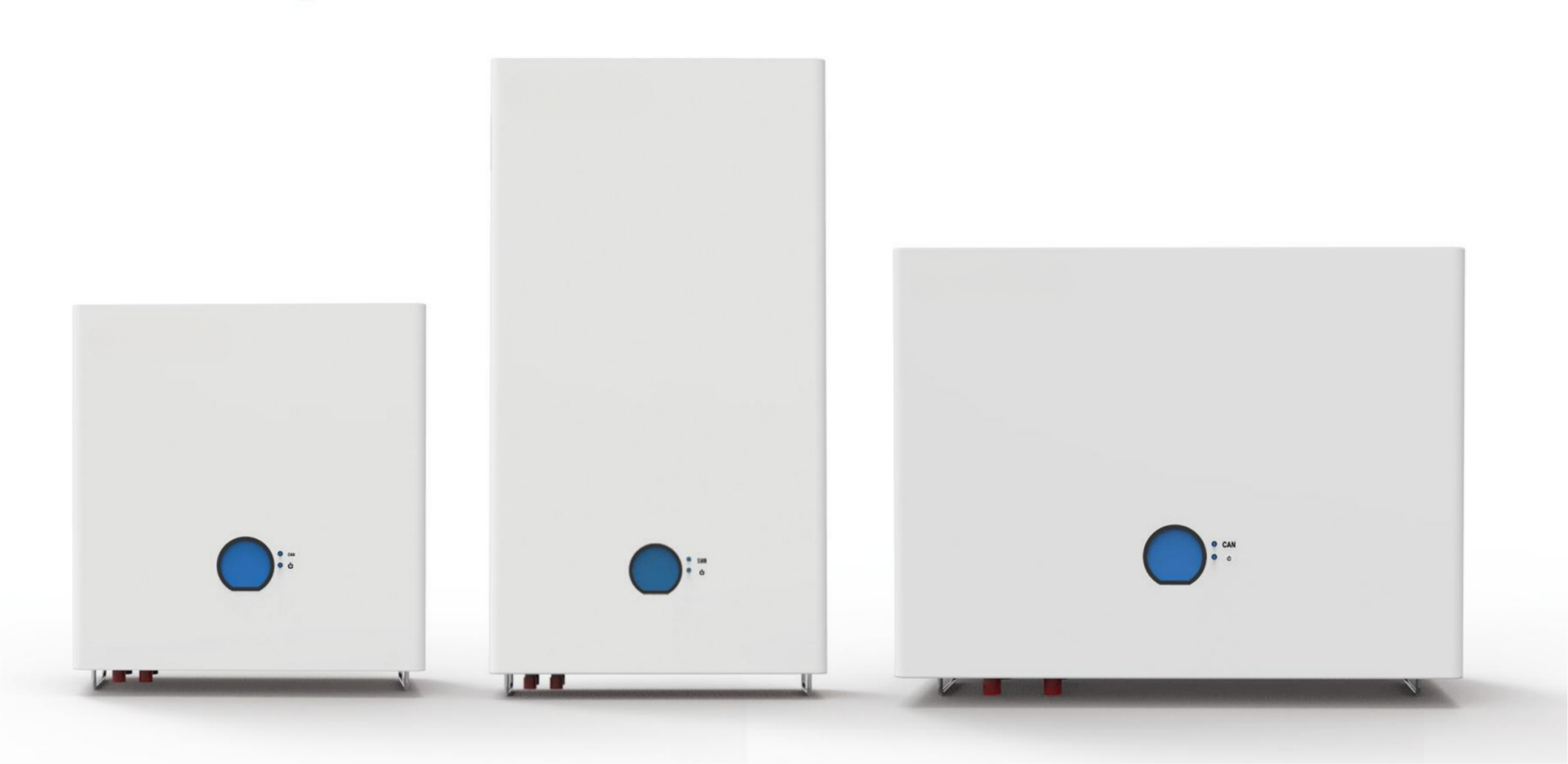
Residential lithium packs use a different logic. The 48V Wall Mounted Lithium Battery Pack lists 48V100Ah, 48V200Ah, 48V280Ah, and 48V314Ah options, with nominal energy from 4800Wh to 15072Wh and usable energy from 4320Wh to 13564.8Wh. It is meant for compact installations where a wall route saves space. It does not replace a commercial cabinet.
The 48V Rack Mounted Lithium Battery Pack uses HZR-100-15S, HZR-200-15S, HZR-280-15S, and HZR-314-15S pack references. Its capacity ladder matches 48V100Ah through 48V314Ah, and the product data lists RS485/CAN/Bluetooth optional communication. That route is useful when cabinet service access matters. The 51.2V Rack Mounted Lithium Battery Pack moves to HZR-100-16S, HZR-200-16S, HZR-280-16S, and HZR-314-16S references, with nominal energy from 5120Wh to 16076.8Wh and usable energy from 4608Wh to 14469.12Wh.
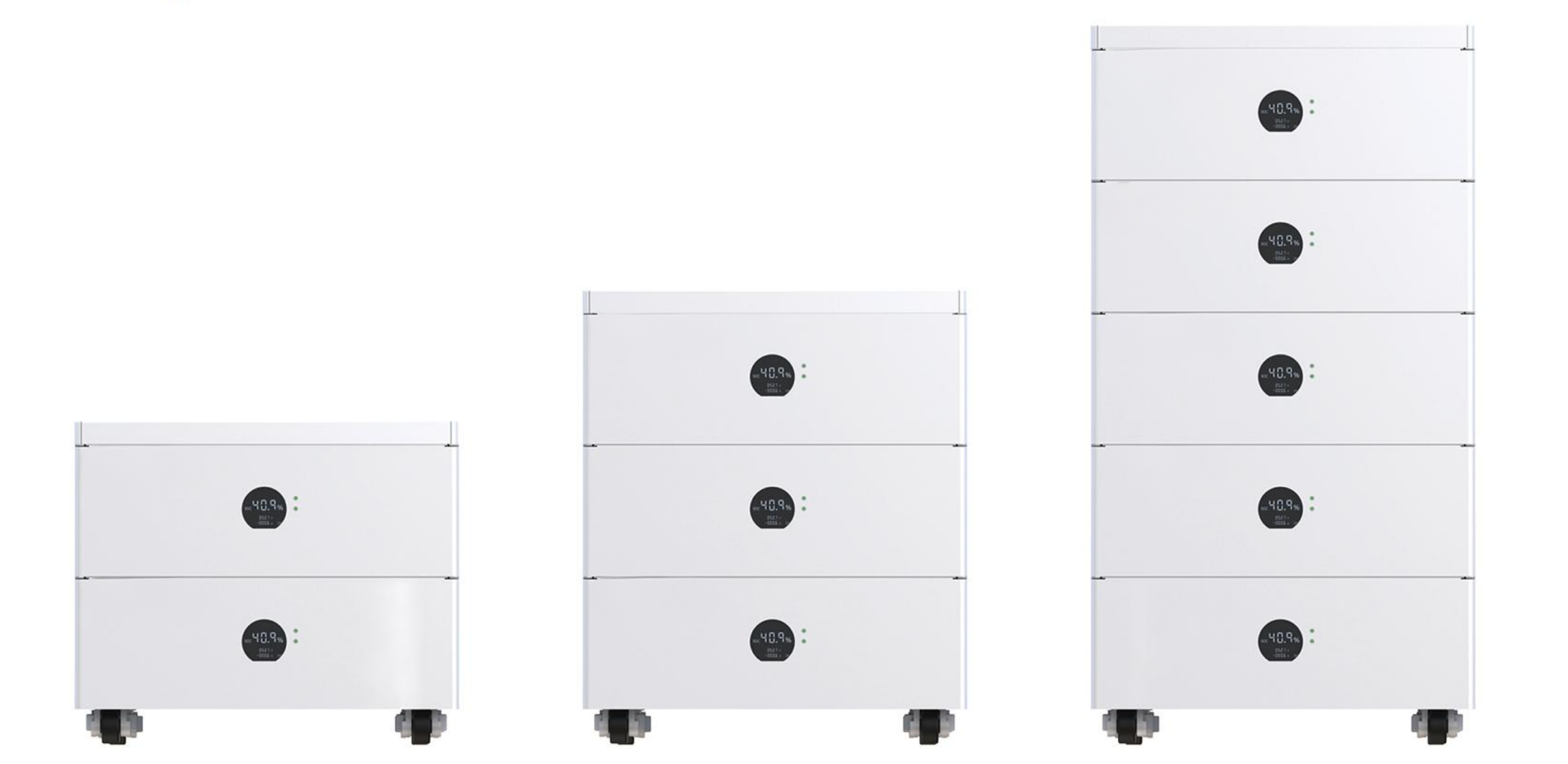
The stacked route answers another problem. AilumPower’s Stacked Lithium Battery Pack uses 51.2V100Ah modules, with nominal energy steps of 10240Wh, 15360Wh, 20480Wh, 25600Wh, and 30720Wh. A buyer who expects future expansion may prefer stacked storage over a fixed single wall pack. The mobile route is different again: the 51.2V Mobile Lithium Battery Pack offers 51.2V280Ah and 51.2V314Ah options for movable backup or temporary deployment.
An installer replacing a small solar backup system may have no cabinet space, only a wall near the inverter. In that case, a wall-mounted product can be the practical choice. A buyer should not force a rack route unless front service access, cabinet organization, or repeat installation practice justifies it.
Rack packs make sense when the buyer knows cabinet dimensions, cable routing, service clearance, and communication expectations. If the project only says “51.2V battery” without cabinet drawings or inverter compatibility review, the product family review is incomplete.
Procurement guidance for storage systems commonly emphasizes technical scope, commissioning, safety review, and documentation. In a practical AilumPower order, the buyer should keep voltage, nominal energy, usable energy, model reference, communication route, cycle statement, and installation format on the same page. For lithium packs, RS485/CAN/Bluetooth optional communication appears across several product routes. For high-voltage modules, RS485/CAN communication appears in the published data. Those details should not be hidden in small print.
A distributor stocking mixed battery products should label the stock by family, not only capacity. A 51.2V rack battery, a 51.2V stacked battery, and a 51.2V mobile battery do not serve the same installation. A warehouse or sales team that treats them as one product group can create replacement mistakes later.
| Storage route | Real AilumPower evidence | Best-fit buyer problem | Not ideal when |
|---|---|---|---|
| Commercial and Industrial ESS | HZ1241100AO, 100kW AC, 241kWh battery rated energy | Factory backup, solar-plus-storage, commercial cabinet project | Small residential backup is enough |
| 48V Wall Mounted Lithium Battery Pack | 48V100Ah to 48V314Ah, 4800Wh to 15072Wh nominal energy | Compact rooms and wall-mounted solar backup | Rack service access is required |
| 48V and 51.2V Rack Mounted Lithium Battery Packs | HZR 15S and 16S routes, RS485/CAN/Bluetooth optional | Cabinet installers and repeat service projects | There is no cabinet plan |
| Stacked Lithium Battery Pack | 51.2V100Ah modules, 10240Wh to 30720Wh nominal energy steps | Expandable home or small-business storage | A locked rack cabinet is required |
| 51.2V Mobile Lithium Battery Pack | 51.2V280Ah and 51.2V314Ah, 14336Wh and 16076.8Wh nominal energy | Temporary backup or movable site power | Permanent cabinet wiring is the goal |
A factory buyer should ask whether the manufacturer can provide the cabinet route, AC-side technical data, battery voltage range, protection level, and project handover documents that the engineering team needs. A residential distributor should ask whether the product family is clear enough for sales, warehousing, installation, and replacement. Both buyers are evaluating the same brand, but they are not evaluating the same product route.
A contractor replacing batteries in an existing cabinet may need the 48V or 51.2V rack pack route. A villa installer may need wall-mounted lithium. A small business owner may need stacked expansion. A temporary worksite may need mobile storage. A commercial solar site may need the HZ1241100AO cabinet. Good manufacturer review starts by naming the real use case before comparing model values.
Some buyers begin with wall, rack, or stacked products and then discover that the project is really a commercial ESS integration job. AilumPower’s high-voltage module pages help define that boundary. The 25.6V/48V/51.2V high-voltage rack-mounted module page lists 48V100Ah, 51.2V100Ah, and 25.6V200Ah options. The 51.2V high-voltage module page lists 51.2V280Ah and 51.2V314Ah options. The liquid cooling high-voltage module page moves into 153.6V280Ah and 166.4V314Ah routes.
These products should be reviewed when the buyer or integrator knows how the cabinet will be built. They are not the best first route for a distributor selling simple home backup products. The manufacturer review should ask whether high-voltage modules are being purchased as part of a commercial cabinet system or as separate components for another party to integrate.
A distributor that orders wall, rack, stacked, and mobile batteries in one shipment should not let the warehouse label them only as lithium batteries. A 48V wall pack should be stored and sold as a compact wall-mounted product. A 51.2V rack pack should be stored with cabinet products. A stacked system should be kept with expansion-oriented residential storage. A mobile unit should be described as movable backup power. Those labels reduce the chance that a sales team or installer selects a product by voltage alone.
Receiving photos can help. One photo of the product label, one photo of the carton group, and one note about the intended buyer route are enough to make later replacement easier. This is especially useful for repeat installers who may call months later with only a model reference and a site photo.
A purchase order should not end at product selection. It should state how the goods will be checked when they arrive and how the buyer will identify the same route later. For the Commercial and Industrial ESS, that means cabinet-level records. For 48V and 51.2V rack packs, that means voltage route, model reference, usable energy, and communication option. For stacked products, the record should include the module count and expected expansion path. For mobile products, the record should note that the unit is not a fixed rack replacement.
This kind of language helps a manufacturer review become useful after delivery. The buyer is not only asking whether a product exists. The buyer is asking whether the product family can be ordered, received, installed, stocked, and replaced without turning every future service request into a new investigation.
That is why the manufacturer shortlist should include product-family clarity as a real decision factor, not only price, voltage, or capacity.
The buyer should move beyond product comparison when the order involves site integration, cabinet design, repeated shipment, or long-term service. At that point, the question is not only whether AilumPower has the right battery product. The question is whether the buyer’s file clearly assigns responsibility for product selection, installation format, communication, replacement labeling, and commissioning records. When that file is clear, a mixed battery storage product family becomes an advantage instead of a source of confusion.
Residential and light-commercial installers often decide quickly between wall, rack, stacked, and mobile products because the site conditions are obvious to them. The purchase team may not see those same conditions. A wall pack may have been chosen because the inverter room has no rack space. A stacked product may have been chosen because the owner expects future expansion. A mobile product may have been chosen because temporary site power matters more than a fixed installation.
The manufacturer review should preserve that installer logic. If the buyer changes a wall pack to a rack pack only to standardize stock, the installation room may no longer fit. If the buyer changes stacked storage to a single rack pack, the expansion path may disappear. If the buyer changes a mobile battery to a fixed rack route, the temporary power job may no longer be solved. Product family clarity protects the installation workflow as much as it protects the quotation.
