

Get quote
Get Free Consultation!
We are ready to answer right now! free consultation.
Email:ttxxkj888@gmail.com
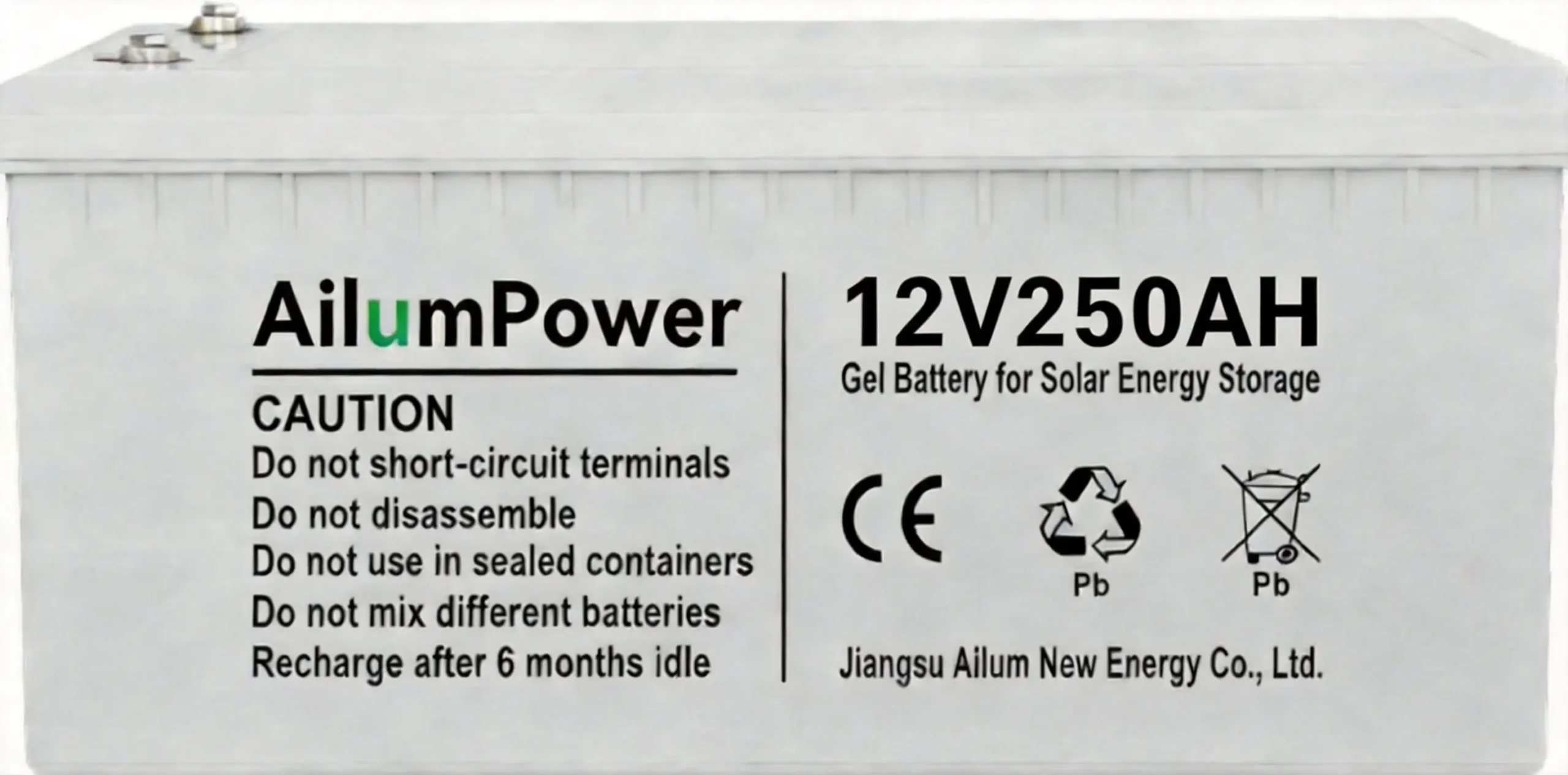
A buyer choosing a VRLA gel battery supplier should begin with service mode, capacity, storage time, cabinet fit, and replacement handling. AilumPower supplies 12V VRLA gel batteries across a wide capacity range, including 12V24Ah, 12V100Ah, 12V150Ah, 12V200Ah, and 12V250Ah products. The range is suitable for solar and wind energy systems, telecom systems, UPS, and standby power, but each capacity creates different weight, cabinet, and delivery requirements.
The first item to confirm is whether the order is for a new project, a distributor stock order, or a later replacement. A 12V100Ah battery and a 12V250Ah battery can share charge-voltage logic, but they do not create the same handling or service plan.
VRLA gel batteries are often selected because buyers want sealed, maintenance-free standby or deep-cycle storage for renewable and backup applications. AilumPower’s gel battery pages describe a valve-regulated lead-acid gel route with no free electrolyte, no acid mist, and maintenance-free operation. The pages also list float design life over 8 years and self-discharge of no more than 3% per month at 25C. These details matter when a distributor plans inventory or when a project contractor holds batteries before installation.
A supplier review should ask how long the batteries will stay in storage, what temperature range the warehouse may reach, and whether the batteries will be used for solar lighting, wind energy, telecom, UPS, or another standby system. The published charge voltage values should stay with the receiving file so the warehouse and service team do not treat the batteries as ordinary boxes waiting on a shelf.
AilumPower gel battery data lists float charge voltage of 13.5V-13.8V and equalize charge voltage of 14.4V-14.8V at 25C. The charge method also lists float use at 2.275V per cell with tolerance and cycle use at 2.45V per cell with tolerance. A buyer should keep those values in the project file, especially when solar controllers, wind systems, or standby chargers are supplied by different parties.
The 12V100Ah Gel Battery weighs 30kg and measures 405 x 173 x 231mm. The 12V150Ah Gel Battery weighs 40.1kg and measures 482 x 171 x 240mm. The 12V200Ah Gel Battery weighs 55.5kg and measures 525 x 240 x 219mm. The 12V250Ah Gel Battery weighs 65.5kg and measures 525 x 268 x 220mm. Those differences change cabinet fit, lifting method, packing, and replacement planning.
A distributor stocking mixed capacities should label them by capacity, weight, dimensions, and intended use. A service crew replacing a telecom backup battery may not be able to use a larger capacity if the cabinet cannot accept the size or weight. A solar lighting contractor should also avoid changing capacity without checking the battery compartment, controller setting, and project runtime requirement.
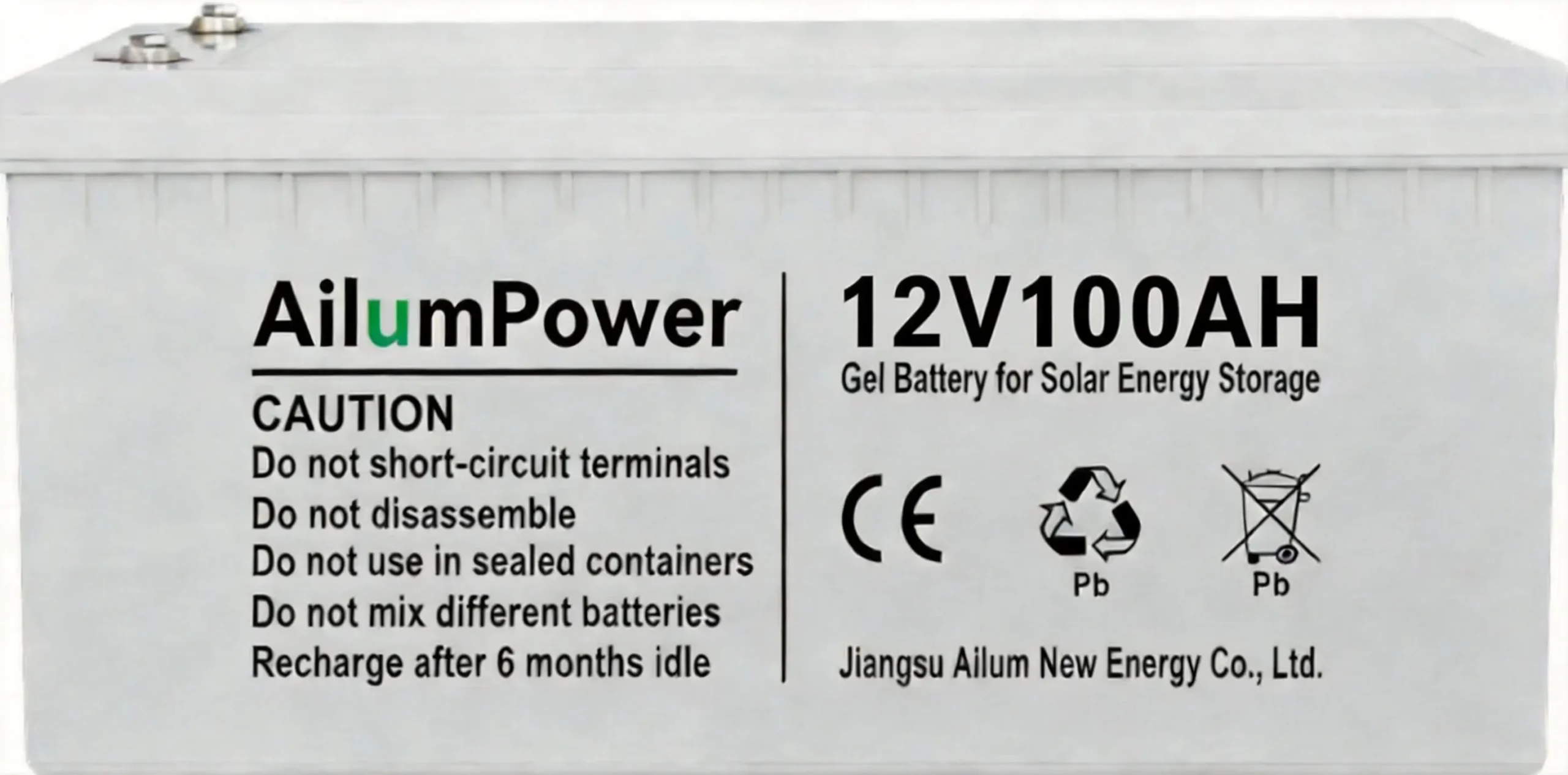
Telecom and UPS replacement orders are different from new solar lighting projects. In replacement work, the buyer may already have a cabinet, cable layout, charger setting, and maintenance record. The supplier review should begin by matching voltage, capacity, dimensions, terminal layout, and weight. If the old battery record is incomplete, the buyer should collect a label photo and cabinet measurement before approving a substitute capacity.
A UPS or telecom distributor may want 12V100Ah, 12V150Ah, and 12V200Ah stock at the same time. That can be reasonable, but the stock file should not merge them into one generic standby battery group. The heavier 12V200Ah and 12V250Ah products require more careful unloading and cabinet planning than smaller capacities.
AilumPower pages list temperature ranges for discharge, charge, and storage. For 12V gel batteries, the data includes discharge from -45C to 50C, charge from -20C to 45C, and storage from -30C to 40C. The same product pages show capacity changes by temperature, such as 105% at 40C, 82% at 0C, and 68% at -20C. A buyer should treat storage temperature as part of the inventory plan, not as a small note after the order is placed.
| AilumPower gel battery | Published weight and size | Useful buyer route | When to check twice |
|---|---|---|---|
| 12V100Ah | 30kg, 405 x 173 x 231mm | Solar lighting, small UPS, telecom backup | When longer runtime is required |
| 12V150Ah | 40.1kg, 482 x 171 x 240mm | Medium standby or renewable storage | When cabinet width is tight |
| 12V200Ah | 55.5kg, 525 x 240 x 219mm | Larger solar, wind, telecom, or UPS backup | When lifting and cabinet depth are limited |
| 12V250Ah | 65.5kg, 525 x 268 x 220mm | Longer-runtime standby projects | When old cabinets were built for smaller batteries |
A distributor stocking VRLA gel batteries should record the date goods arrived, the capacity group, the storage location, and the intended project type. AilumPower’s self-discharge value of no more than 3% per month at 25C gives buyers a reason to treat storage time seriously. Batteries that wait longer in stock should not be shipped without checking whether the storage record and charge plan are still suitable for the project.
Capacity groups should also stay separate. A 12V100Ah product may be stocked for smaller solar lighting, UPS, or telecom replacement. A 12V250Ah product may be held for longer-runtime standby projects. If both products sit in the same warehouse lane with similar labels, a picking mistake can lead to wrong weight, wrong case size, and wrong replacement fit.
A service buyer may send a photo of an old battery label and ask for a larger capacity replacement. That request should be checked carefully. The 12V250Ah Gel Battery weighs 65.5kg and measures 525 x 268 x 220mm, while the 12V100Ah Gel Battery weighs 30kg and measures 405 x 173 x 231mm. The larger product may not fit the old cabinet and may require different handling. The supplier review should ask for cabinet dimensions before approving the change.
Solar lighting projects often combine gel batteries with controllers and panels from the lighting system. The buyer should keep float and equalize voltage values with the controller file. If a solar pole base uses a specific battery capacity, changing the battery later should not be done only by matching voltage. The controller, cable route, compartment size, expected runtime, and maintenance practice all matter.
For wind or solar standby use, the same rule applies. The battery supplier can provide capacity options, but the buyer’s system owner should confirm the charge method and service condition. That keeps the battery choice tied to the real renewable system rather than a capacity guess.
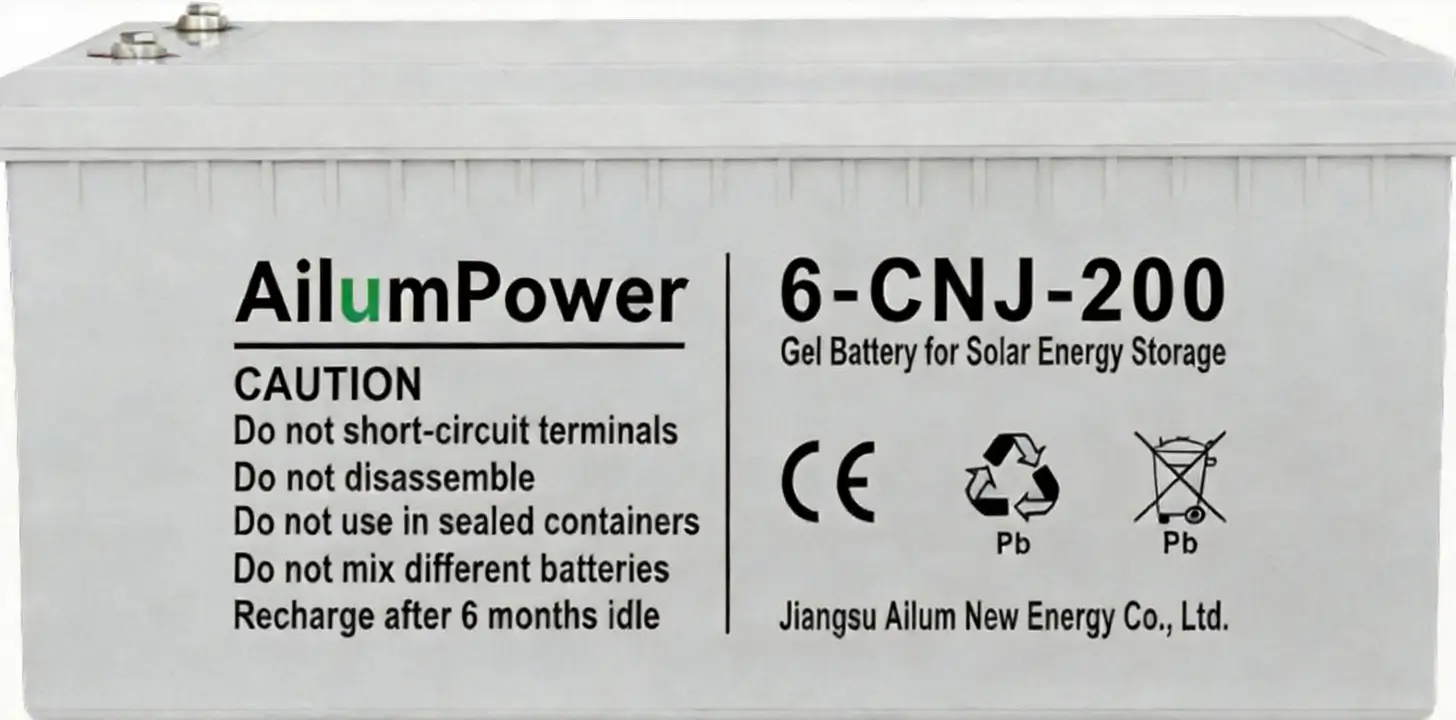
A buyer should avoid changing capacity when the cabinet, controller, charger, cable route, or replacement record is unclear. Moving from 12V100Ah to 12V200Ah may look attractive for runtime, but the larger battery is heavier and larger. The cabinet may not fit it, and the charger setting may not match the replacement plan. A supplier can provide product options, but the buyer must keep site limits visible.
For a solar lighting replacement, the old pole base or battery box may define the usable capacity range. For telecom and UPS, the cabinet and charger usually define the replacement choice. For wind or solar standby systems, the controller and expected autonomy should be reviewed before changing the battery size.
Repeat orders become easier when the buyer keeps a clean record of model, capacity, installation date, storage time before installation, charge-voltage settings, and cabinet location. A distributor can also keep a small receiving photo record for each capacity in a shipment. That record is useful when a later service team asks whether the installed battery was 12V150Ah, 12V200Ah, or 12V250Ah.
The most useful supplier conversation is not only about the lowest unit price. It is about matching capacity, charge voltage, storage condition, weight, dimensions, and replacement path to the actual solar, wind, telecom, or UPS job. When those items are clear, AilumPower’s gel battery range can be stocked and supplied without turning later service into guesswork.
Telecom and UPS buyers often replace batteries under time pressure. The safest order file keeps the old label photo, cabinet dimensions, existing capacity, charger setting, and desired replacement capacity together. If the old battery was 12V150Ah, the buyer should not approve 12V200Ah or 12V250Ah only because more capacity seems useful. The larger battery may not fit, and the handling weight can create a different service requirement.
AilumPower’s gel battery range gives the buyer several capacity choices, but the real replacement should follow the installed system. For telecom, the cabinet and charger route may be more important than simply increasing amp-hour capacity. For UPS, runtime expectations, cabinet structure, and maintenance access should be checked before capacity changes. For solar and wind backup, the controller and battery box should stay part of the decision.
Weight differences change how crews move and install batteries. A 30kg 12V100Ah battery can be handled differently from a 65.5kg 12V250Ah battery. If the replacement site has limited access, stairs, small cabinets, or one-person service conditions, the supplier review should keep the weight visible before the order is approved.
For solar lighting maintenance teams, the weight and size record can decide whether a battery can be replaced during one site visit. For telecom teams, it can decide whether the cabinet door, shelf, and cable path allow the change. For UPS buyers, it can decide whether the replacement can be staged without interrupting other equipment. These are practical questions that should be answered before the supplier prepares the shipment.
A repeat order is safest when it repeats the same capacity and case size unless the project owner has approved the change. If the buyer wants longer runtime, the capacity increase should be treated as a small redesign, not a simple reorder.
Distributors can make this easier by keeping separate shelves or records for solar-lighting stock, telecom stock, UPS stock, and larger renewable standby stock. The battery chemistry may be the same VRLA gel route, but the buyer problem is not the same. That separation makes picking, packing, and later service less dependent on memory.
When several capacities ship together, the carton group should be checked against the order before it leaves the warehouse. A small label error can create a large field problem if a heavy 12V250Ah battery arrives at a site prepared for a smaller unit.
That simple capacity check is one of the easiest ways for a VRLA gel battery supplier and buyer to prevent avoidable replacement delays.
