

Get quote
Get Free Consultation!
We are ready to answer right now! free consultation.
Email:ttxxkj888@gmail.com
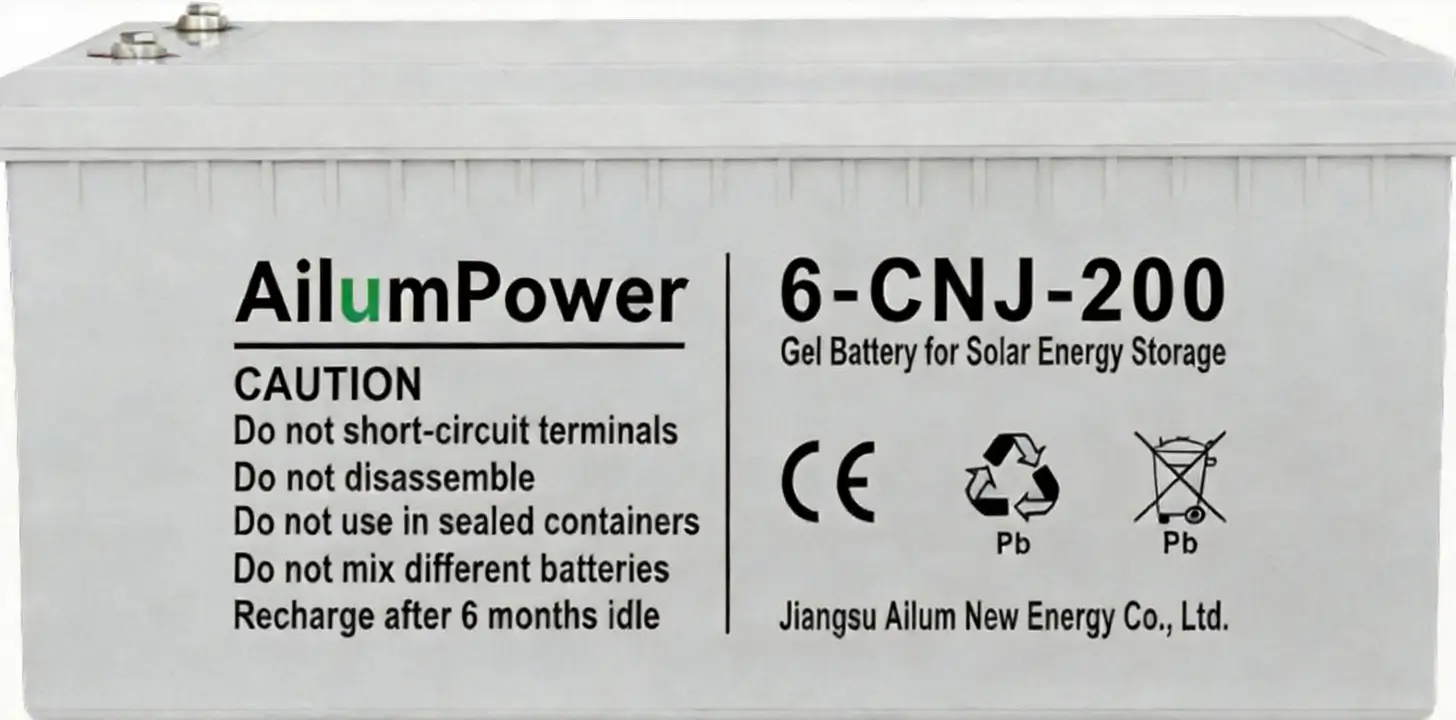
VRLA gel battery temperature compensation is a practical topic for buyers who install 12V gel batteries in solar lighting, wind backup, telecom cabinets, UPS rooms, or maintenance-free standby systems. AilumPower’s gel battery pages already give the most important starting data: float charge voltage of 13.5V-13.8V at 25C, equalize voltage of 14.4V-14.8V, a float charge method of 2.275 plus or minus 0.025V per cell with temperature compensation, and a cycle charge method of 2.45 plus or minus 0.05V per cell with temperature compensation.
The first thing to confirm is not only amp-hour capacity. Buyers should confirm the ambient temperature range, charge controller setting, storage duration, replacement capacity, and whether the battery is used in float service or cyclic service. A 12V24AH battery in a compact lamp box and a 12V250AH battery in a renewable backup cabinet may share the same voltage rules, but they create very different handling, storage, and maintenance decisions.
AilumPower’s 12V gel battery pages list charge voltage at 25C: float 13.5V-13.8V and equalize 14.4V-14.8V. They also state float charge at 2.275 plus or minus 0.025V per cell with plus or minus 3mV per cell per degree C, and cycle charge at 2.45 plus or minus 0.05V per cell with plus or minus 5mV per cell per degree C. That means the buyer should treat the 25C value as the reference point, not as a fixed setting for every site.
Common VRLA battery manuals explain the reason in plain engineering terms: overcharge at high temperature can shorten battery life, while undercharge at low temperature can leave the battery short of capacity. In purchasing language, this means the controller or charger setting belongs in the project file. If a solar lighting project is installed in a hot cabinet, a cold roadside battery box, or a mixed climate inventory warehouse, the battery order should not be approved without checking how charging will be managed.
Telecom, UPS, and standby backup systems often keep VRLA gel batteries on float charge for long periods. Solar lighting systems are more cyclic because the battery charges in the daytime and discharges at night. AilumPower’s data gives both float and cycle charge methods, so the buyer should not copy one setting into every application. A telecom backup cabinet using 12V100AH or 12V150AH batteries needs a different service discussion from a solar lamp route using smaller capacities or from a renewable backup project using 12V200AH or 12V250AH batteries.
AilumPower’s gel battery range lists storage temperature from -30C to 40C and self-discharge at no more than 3% per month at 25C. That is useful for distributors because not every battery is installed immediately after arrival. If 12V100AH, 12V200AH, and 12V250AH batteries sit in the warehouse for future replacement work, the receiving record should show the arrival date, storage zone, carton group, and capacity. That record helps the buyer decide when a freshening charge or voltage check should be considered according to the battery management plan.
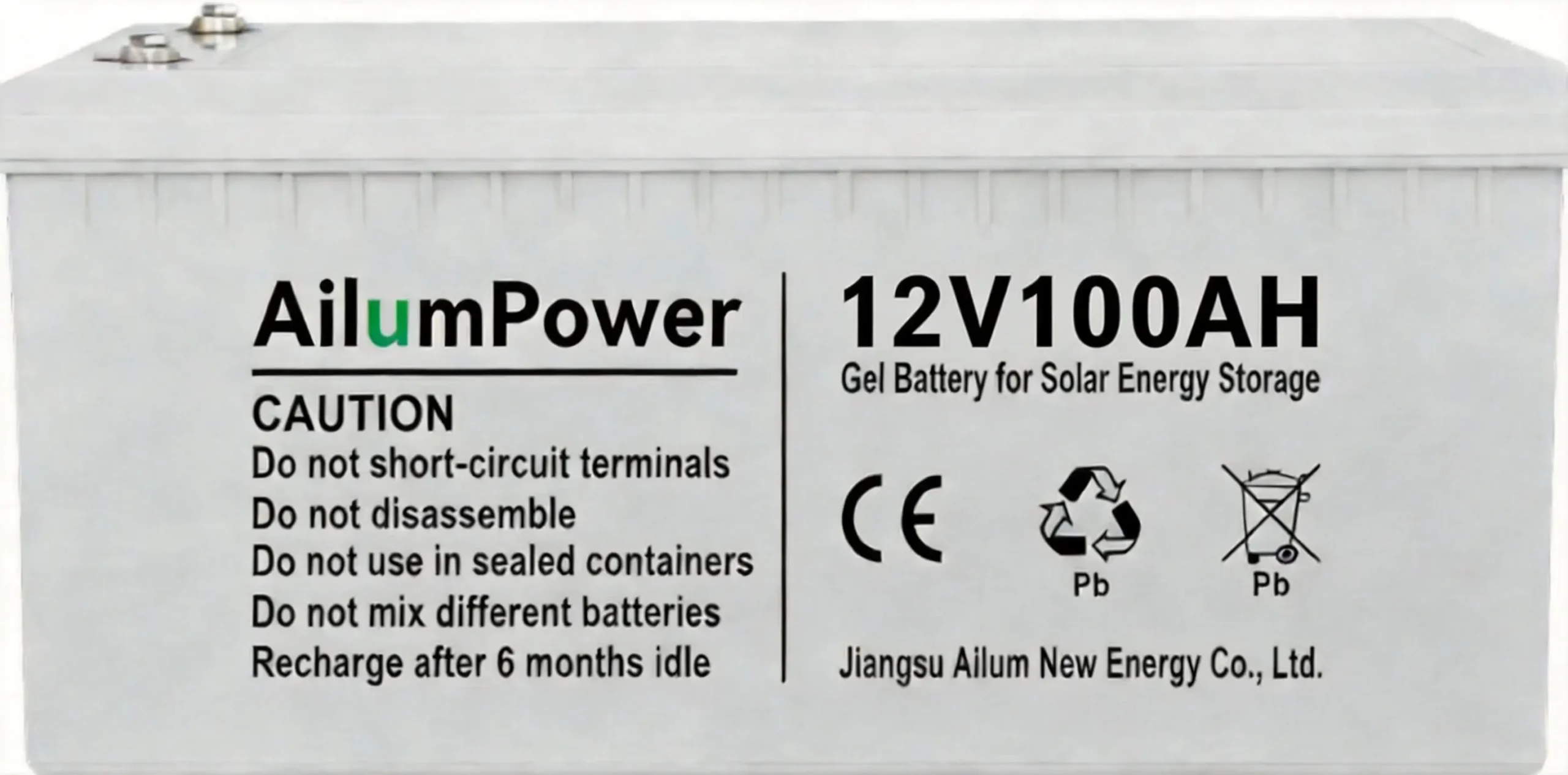
The voltage logic may look similar across the AilumPower 12V gel battery range, but the physical battery is not the same. The 12V24AH Gel Battery is a compact 7.3kg battery with dimensions of 175 x 166 x 125mm. The 12V100AH Gel Battery weighs 30kg and measures 405 x 173 x 231mm. The 12V200AH Gel Battery weighs 55.5kg and measures 525 x 240 x 219mm. The 12V250AH Gel Battery weighs 65.5kg and measures 525 x 268 x 220mm. A buyer who writes only “12V gel battery” on a purchase request is leaving too much room for handling and installation errors.
Capacity also changes how the battery is normally used. A compact 12V24AH product may be discussed for smaller solar lighting or replacement stock. A 12V100AH product can fit broader solar, wind, telecom, UPS, and maintenance-free backup applications. A 12V200AH or 12V250AH product is more suitable when longer runtime or larger standby energy is needed, but the buyer must plan lifting, shelf space, cabinet size, and delivery method.
| AilumPower gel battery | Capacity and size facts | Temperature-related buying note | When to avoid this route |
|---|---|---|---|
| 12V24AH Gel Battery | 24Ah, 7.3kg, 175 x 166 x 125mm | Useful for compact replacement stock where voltage checks are easy to schedule | Not enough for larger standby or long-runtime renewable backup |
| 12V100AH Gel Battery | 100Ah, 30kg, 405 x 173 x 231mm | Keep float, cycle, and storage records with the project file | Not ideal when the project needs heavier runtime capacity |
| 12V200AH Gel Battery | 200Ah, 55.5kg, 525 x 240 x 219mm | Storage temperature and lifting plan should be confirmed before bulk shipment | Not suitable for small battery boxes or light handling routes |
| 12V250AH Gel Battery | 250Ah, 65.5kg, 525 x 268 x 220mm | Needs clear warehouse grouping and installation records because it is heavy stock | Not a casual substitute for smaller 12V capacities |
A solar lighting buyer may think the solar controller will take care of the battery automatically. That may be true only if the controller is correctly matched to the battery type, capacity, and site temperature. AilumPower lists a maximum charge current of no more than 0.25C10 for its 12V gel battery range. That matters when a buyer approves a replacement battery for an existing lighting controller or when a distributor supplies mixed capacity stock to several projects.
Telecom and UPS buyers may face another problem: batteries often stay on standby for long periods. If the site is hot, float voltage that is too high can shorten service life. If the site is cold, voltage that is too low can leave the battery undercharged. The buyer does not need to solve the charger design in the purchase article, but the purchase file should require the project engineer or installer to confirm the charger setting against AilumPower’s 25C values and the actual site condition.
AilumPower’s temperature versus capacity data shows 105% at 40C, 82% at 0C, and 68% at -20C. That does not mean a buyer should operate every site at high temperature; it means cold conditions reduce available capacity and should be considered during sizing. A roadside cabinet in winter or a remote renewable backup site may need a different capacity discussion from an indoor UPS room. If a buyer selects a 12V100AH battery only from a summer runtime estimate, the winter performance may not match the user’s expectation.
AilumPower allows discharge from -45C to 50C and charge from -20C to 45C, while storage is listed from -30C to 40C. In a hot enclosure, the buyer should avoid treating the upper temperature limit as a normal target. The purchasing record should ask where the battery will sit, whether the enclosure has ventilation, whether the charge controller supports temperature compensation, and who will read voltage if the batteries remain in storage before installation.
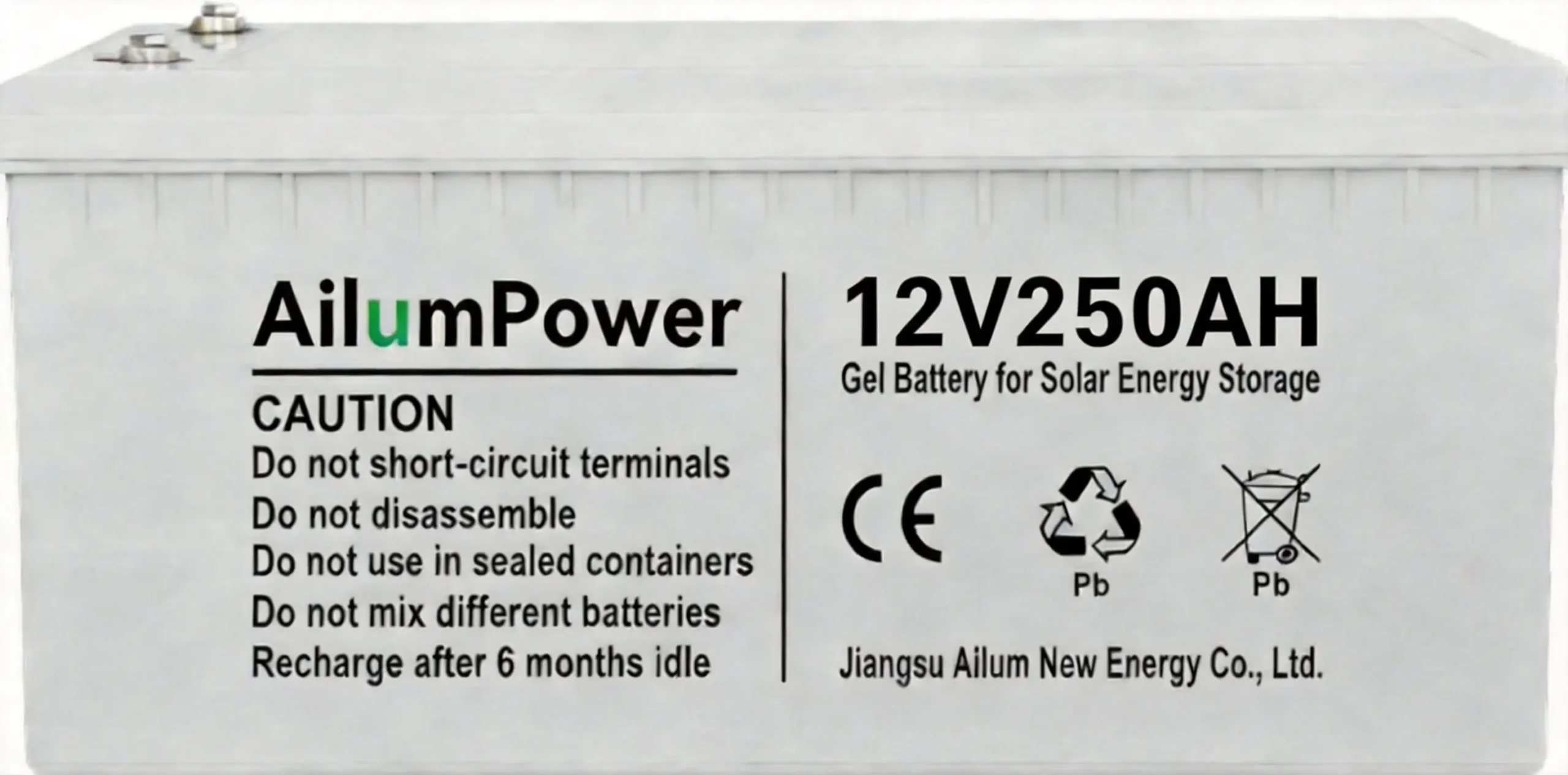
A professional purchase file for VRLA gel batteries should include the battery model, rated capacity, 10-hour capacity condition, weight, dimensions, maximum charge current, float voltage, equalize voltage, charge method, storage temperature, and expected service mode. For AilumPower’s 12V gel batteries, that means the buyer can write an order that is much clearer than a capacity-only request. The file can say, for example, that a project uses 12V200AH gel batteries with 55.5kg weight, 525 x 240 x 219mm dimensions, float 13.5V-13.8V at 25C, and a controller that must be reviewed for temperature compensation.
The file should also separate new installation from replacement. For a new solar lighting project, the buyer can still adjust battery capacity, controller route, and enclosure design before installation. For replacement stock, the buyer has to match the existing battery space and charger route. A 12V250AH battery may be technically stronger for runtime, but it is not useful if the existing cabinet was sized around a smaller case or if installers cannot safely handle the weight.
For a distributor, the purchase file should also separate batteries by the site condition they serve. A batch of 12V24AH compact batteries for small lighting products can be stored and issued differently from 12V200AH or 12V250AH batteries for larger renewable backup systems. If the order contains mixed capacities, each pallet or storage zone should keep capacity, arrival date, and intended project together. That prevents a replacement team from using the correct voltage but the wrong physical battery group.
Replacement work is where temperature compensation and capacity records become easy to lose. A maintenance team may only report that an old 12V gel battery failed, without naming the original capacity, case size, charger setting, or service temperature. If the buyer then chooses a larger battery only because longer runtime sounds safer, the new unit may not fit the enclosure or may be charged by equipment that was never checked for the new capacity.
A safer replacement request should include the installed battery label, battery box dimensions, charger or controller model, measured room or enclosure temperature, and whether the battery is used in standby or daily cycling. For AilumPower batteries, the buyer can then compare 12V24AH, 12V100AH, 12V200AH, and 12V250AH routes using actual weight, dimensions, charge voltage, and service mode instead of buying by amp-hour number alone. That turns a maintenance problem into a controlled procurement decision.
The same logic applies when a solar lighting contractor keeps spare batteries for several projects. If some sites are hot, some are cold, and some batteries sit in storage before use, the replacement record should include voltage checks and storage conditions. The buyer does not need a complicated laboratory record, but it should be clear enough that a future service team can understand why a specific capacity was selected and how it should be charged.
Temperature compensation should change the buying decision when the buyer cannot confirm charger behavior, when batteries will wait in storage, when the site is hot or cold for long periods, when the project has mixed capacity stock, or when replacement crews do not have the original battery record. In those situations, the safer route is to slow down the purchase file and verify the charger, storage, and model details before shipment.
For a compact lighting replacement, that may mean staying with a 12V24AH or 12V50AH route and improving the record rather than jumping to a larger battery. For a telecom or renewable backup project, it may mean using 12V100AH, 12V200AH, or 12V250AH batteries but requiring clear storage and float-voltage records. A buyer who treats temperature compensation as part of the order will have fewer surprises than a buyer who treats gel batteries as simple sealed boxes.
