

Get quote
Get Free Consultation!
We are ready to answer right now! free consultation.
Email:ttxxkj888@gmail.com
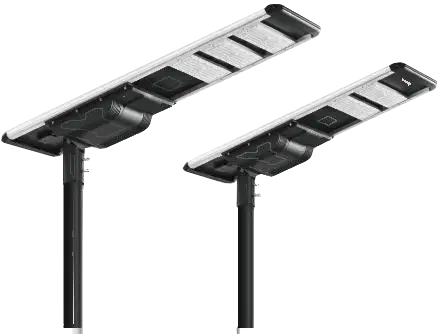
Solar lamp head mounting height and lighting time should be decided before a buyer chooses wattage. AilumPower offers several lamp head routes: AP-MSCILH-PS for mains-solar hybrid roads with 6-10m mounting height and 6-12h adjustable lighting time, AP-ISLH-CV for integrated solar lamp head projects from 60W to 120W, and AP-ISLH-CL for lower-power areas such as parks, pathways, and campus edges. The right route depends on road width, available mains power, solar exposure, fixture power, and the number of hours the owner expects the light to operate.
The most common mistake is to start with a wattage request and leave pole height until later. If the mounting height, lighting time, and power route are not written together, the buyer may receive a lamp head that fits the price target but not the actual road.
The AP-MSCILH-PS Mains-Solar Hybrid Lamp Head gives a clear example. Its product data lists power routes from 60-70W to 140-150W, 12.8V lithium iron phosphate battery groups from 28Ah/32Ah to 60Ah/64Ah, SRNE MPPT controller routes from 30W/10A to 80W/10A, and 18V monocrystalline solar panel routes from 60W/70W to 140W/150W. It also lists 6-12h adjustable lighting time, IP65 protection, 82mm diameter, and 6-10m mounting height.
Those details belong in one project schedule. A 6m road section does not ask the same questions as a 10m section. A buyer who wants 12h operation should not approve the same battery and panel route as a buyer who only needs 6h. The purchase decision should connect pole height, lighting time, power route, panel route, controller route, and battery group.
A branch road, service lane, or factory-side road may need stable lighting without the highest output route. The buyer can review AP-MSCILH-PS lower power routes or compare AP-ISLH-CV if the site does not need mains support. The decision should start from the road section, not from a single wattage number.
A wider or more public road may need higher output, stronger energy planning, and clearer acceptance checks. If the buyer uses a low-power pathway product for that section, the installation may look complete but fail the owner’s expectation for road coverage and operating hours.
For AP-MSCILH-PS, a clean order should not say only “hybrid solar lamp head.” It should name the route: 60-70W, 80-90W, 100-110W, 120-130W, or 140-150W. It should also show the matching 12.8V lithium iron phosphate battery group, the SRNE MPPT controller route, and the 18V monocrystalline panel route. That allows the buyer to compare the actual package instead of comparing labels.
A municipal buyer may have one road section that needs a longer lighting period and another section where shorter night operation is acceptable. AP-MSCILH-PS lists 6-12h adjustable lighting time, so the project schedule should state which operating target applies to each road section. Otherwise the installer may receive the right product family but the wrong expectation for daily use.
| Project detail | Why it must be written | Product route affected |
|---|---|---|
| Mounting height from 6m to 10m | Changes the road coverage and fixture expectation | AP-MSCILH-PS and AP-ISLH-CV |
| 6-12h lighting time target | Changes battery, panel, and control planning | AP-MSCILH-PS |
| 60W, 80W, 120W, or 140-150W power route | Prevents a broad wattage request from becoming a wrong package | AP-ISLH-CV and AP-MSCILH-PS |
| Solar-only or mains-solar hybrid operation | Decides whether grid support belongs in the lamp head plan | AP-MSCILH-PS versus integrated lamp heads |
The AP-ISLH-CV Integrated Solar Lamp Head covers AP-ISLH-CV01, AP-ISLH-CV02, and AP-ISLH-CV03 models. The rated power options are 60W, 80W, and 120W. The voltage route is DC12V for CV01 and DC24V for CV02 and CV03. The battery options are 12.8V/96Ah, 25.6V/72Ah, and 25.6V/108Ah, with high-efficiency monocrystalline solar panel options of 140W/12V or 275W/36V. The product page also lists IP65 and IK08 protection ratings.
AP-ISLH-CV is a better conversation when the buyer wants an integrated solar lamp head for road, park road, or campus road lighting and does not need mains-solar hybrid support. The mounting and lighting schedule still matters, but the buyer is not planning a grid-supported hybrid route in the same way as AP-MSCILH-PS.
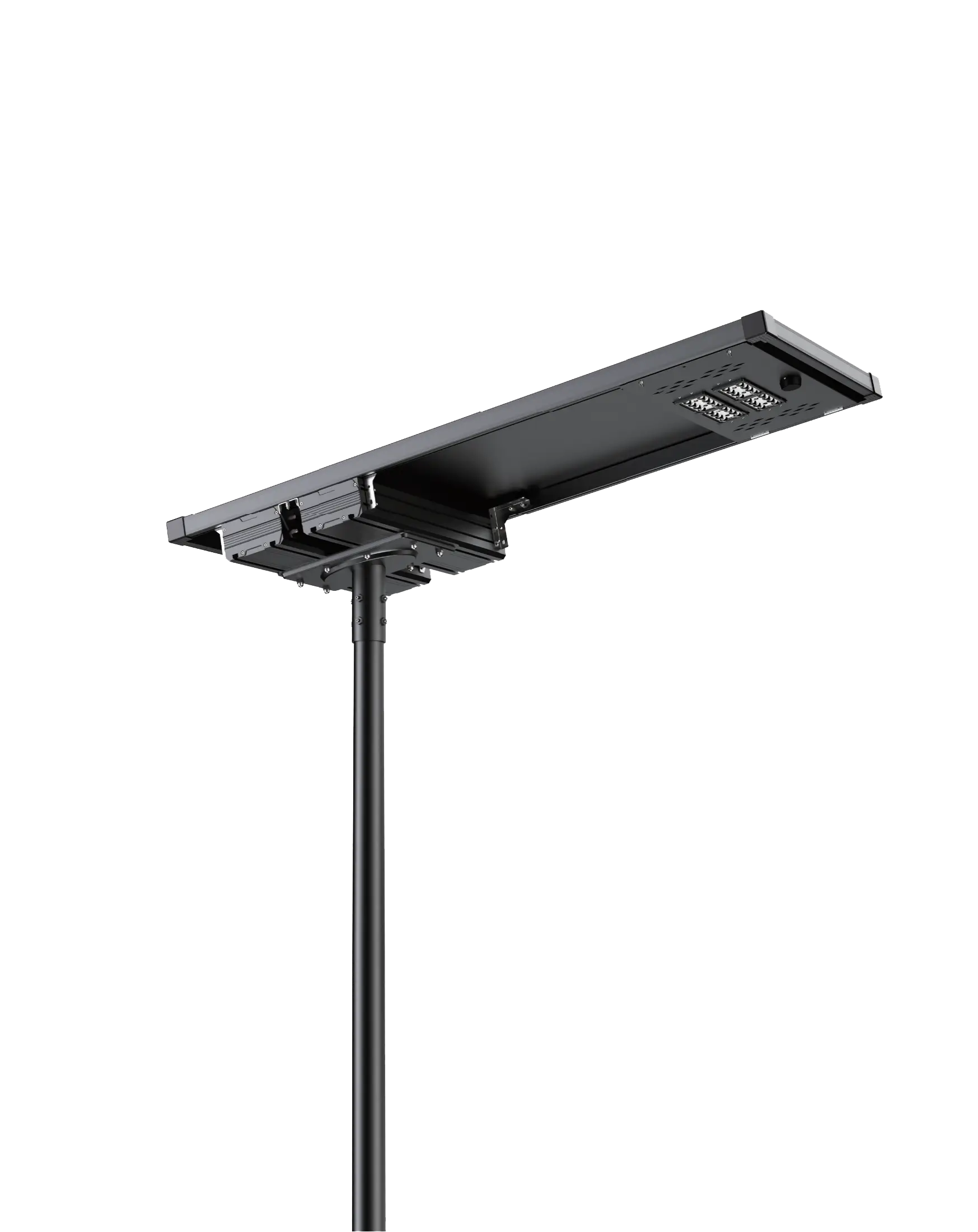
The AP-ISLH-CL Integrated Solar Lamp Head should not be forced into a main-road specification. It includes AP-ISLH-CL01 and AP-ISLH-CL02 models, with 10W and 15W rated power options, 3.2V/36Ah and 3.2V/72Ah lithium battery options, and 33W/5V or 50W/5V high-efficiency monocrystalline solar panels. It also lists 3030/5050 light source and batwing light distribution of 150 degrees x 75 degrees.
This product route fits parks, pathways, campuses, courtyards, and lower-power areas. A project that includes both road lighting and pedestrian lighting should not use one lamp head route everywhere. The buyer can use AP-ISLH-CV or AP-MSCILH-PS for road sections, while AP-ISLH-CL handles smaller zones where a 60W to 120W road product would be excessive.
When the shipment arrives, the receiving team should compare cartons against the road schedule. For AP-MSCILH-PS, the check should confirm power route, battery group, controller route, panel route, IP65 protection expectation, 82mm diameter, and the 6-10m mounting height plan. For AP-ISLH-CV, the check should confirm CV01, CV02, or CV03, rated power, voltage route, battery option, and panel option. For AP-ISLH-CL, the check should confirm CL01 or CL02, 10W or 15W power, battery capacity, panel power, and intended small-area location.
A buyer who separates these checks by road zone reduces installation confusion. A package for a park path should not be sent to a 10m road section, and a mains-solar hybrid lamp head should not be treated as an ordinary integrated solar lamp head.
Approve AP-MSCILH-PS when the project needs solar contribution, mains support, 6-10m mounting height, and a written 6-12h lighting-time target. Approve AP-ISLH-CV when the project needs 60W, 80W, or 120W integrated solar road lighting without hybrid mains support. Approve AP-ISLH-CL when the project is a lower-power area such as a pathway, courtyard, campus edge, or park route. The right order is the one where mounting height, lighting time, wattage, energy route, and road section all point to the same product.
A contractor should not send one total lamp head number to purchasing until the road sections have been separated. One section may use 6m poles and shorter lighting hours, while another section may use 10m poles and a longer night operation target. AP-MSCILH-PS can cover multiple power routes, but the buyer still needs to match each road section with a power group, battery group, MPPT controller route, panel route, and lighting-time target.
For AP-ISLH-CV, the schedule should name whether the section uses CV01, CV02, or CV03. A 60W CV01 route and a 120W CV03 route should not be hidden under the same “integrated solar lamp head” item. For AP-ISLH-CL, the schedule should show CL01 or CL02 and the smaller lighting zone. This lets the warehouse load the right cartons for the right installation team.
After installation, photos of the pole are not enough. The buyer should keep photos or records that show which lamp head route was installed at each zone. For AP-MSCILH-PS, the record should match the route selected for mounting height and lighting time. For AP-ISLH-CV, it should connect CV model, wattage, voltage route, battery route, and panel route. For AP-ISLH-CL, it should confirm that the lower-power lamp heads were installed in the intended smaller areas.
Those records help when a later section needs repair or expansion. The service team can see whether the original product was a mains-solar hybrid lamp head, a higher-output integrated solar lamp head, or a lower-power CL lamp head. That prevents a future replacement from being chosen only by visual similarity.
The buyer should connect lighting hours to the actual energy route. For AP-MSCILH-PS, that means checking the 18V monocrystalline panel route, the 12.8V lithium iron phosphate battery group, and the SRNE MPPT controller route together. If the project asks for longer operation, the battery and panel route should support that target. If the project only needs a shorter period, the buyer may not need the heaviest route.
For AP-ISLH-CV, the battery and panel options should also stay visible. CV01 uses a 12.8V/96Ah battery and 140W/12V panel route, while CV02 and CV03 move into 25.6V battery routes and higher panel planning. The buyer should not use the same lighting-time assumption across all three CV models.
Maintenance teams often inherit a lighting project after the purchasing team has moved on. If the original record names mounting height, model, power route, and lighting-time target, the maintenance team can order replacements with less guesswork. A 6m section using AP-MSCILH-PS may not need the same replacement route as a 10m section. A park path using AP-ISLH-CL should not be repaired with a product chosen for a road section.
The record should be simple enough to use in the field: road section, pole height, lamp head model, wattage, battery route, panel route, and operating-hour target. That is the practical bridge between procurement and long-term service.
A road project can include a gate area, a main road, a side road, a pedestrian path, and a parking edge. These zones should not be forced into one lamp head model if their mounting height and lighting-hour targets differ. AP-MSCILH-PS can serve sections that need mains-solar hybrid support. AP-ISLH-CV can serve stronger integrated solar road sections. AP-ISLH-CL can serve smaller areas where lower power is enough.
The buyer should write these zones before confirming quantities. That way the supplier can match product routes to real use conditions, and the installer receives a plan that explains why different lamp heads are appearing in the same shipment.
When the route is written this way, price comparison also becomes fairer. The buyer can compare AP-MSCILH-PS routes against other hybrid requirements, AP-ISLH-CV routes against road-lighting requirements, and AP-ISLH-CL routes against smaller lighting requirements. The project no longer has to pretend that every pole has the same height, same operating hours, and same power need.
This approach is especially useful for phased road work. If the first phase installs main-road lighting and the second phase adds paths or parking edges, the owner can reuse the earlier schedule format and choose the correct lamp head family for the new zone.
It also keeps spare lamp heads from being purchased blindly when the next phase begins and the site team changes. The buyer can repeat the road-zone logic instead of restarting product selection.
