

Get quote
Get Free Consultation!
We are ready to answer right now! free consultation.
Email:ttxxkj888@gmail.com
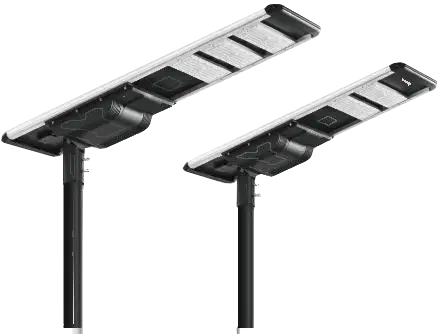
A mains solar hybrid lamp head is for road, park, campus, or industrial lighting projects where the buyer wants solar savings but does not want the lighting plan to depend only on stored solar power. The AilumPower AP-MSCILH-PS Mains-Solar Hybrid Lamp Head is the product to review first when a project asks for grid-supported operation, 6-10m mounting height, 6-12h adjustable lighting time, and a lamp head route that keeps solar panels, lithium battery groups, MPPT controller, and mains support in the same project discussion.
The first decision is not the highest wattage. The buyer should confirm road width, pole height, expected lighting hours, local power availability, and whether the installer can manage both solar and mains wiring safely.
Some road projects are sold as solar projects even when the site does not have enough solar exposure, battery space, or maintenance discipline to rely on solar alone. In those cases, a mains-solar hybrid route can be more honest than forcing a fully off-grid product. AP-MSCILH-PS gives buyers 60-70W, 80-90W, 100-110W, 120-130W, and 140-150W power routes, which lets the project move beyond a single wattage assumption.
For a municipal road or industrial access road, the buyer should ask what happens after several cloudy days, after a controller fault, or when a battery group ages. A mains-supported lamp head can reduce the risk of dark road sections when the project cannot accept interruption. It should still be specified carefully, because a hybrid lamp head is not the same as a standard grid luminaire and not the same as an all-in-one off-grid solar lamp.
A contractor upgrading older pole lighting may already have mains wiring available. AP-MSCILH-PS can be considered when the buyer wants solar contribution without removing the grid-supported safety route from the design.
An industrial park may have roads, loading areas, and fence-line sections with different lighting expectations. The buyer should not use the same off-grid lamp head everywhere if some zones need a stronger backup path.
The product data for AP-MSCILH-PS gives several details that should be written into the order instead of being left as general language. The lamp head uses 12.8V lithium iron phosphate battery groups from 28Ah/32Ah to 60Ah/64Ah. It uses SRNE MPPT controller routes from 30W/10A to 80W/10A. It pairs with 18V monocrystalline solar panel routes from 60W/70W to 140W/150W. It also lists IP65 protection, an 82mm diameter, and a 6-10m mounting height range.
Those details matter because each wattage route changes the supporting parts. A buyer who approves only “100W hybrid lamp head” may still leave the installer unclear about panel wattage, controller route, battery group, lighting time, and pole height. The purchase file should tie these values together by road section.

Not every lighting point needs mains support. The AP-ISLH-CV Integrated Solar Lamp Head covers AP-ISLH-CV01, AP-ISLH-CV02, and AP-ISLH-CV03 models with 60W, 80W, and 120W rated power options. It uses DC12V for CV01 and DC24V for CV02 and CV03, with lithium battery options of 12.8V/96Ah, 25.6V/72Ah, and 25.6V/108Ah. If the buyer is lighting a road or park section where fully integrated solar operation is acceptable, CV may be simpler than AP-MSCILH-PS.
The AP-ISLH-CL route is even more focused on lower-power areas. Its AP-ISLH-CL01 and AP-ISLH-CL02 models provide 10W and 15W rated power options, with 3.2V/36Ah and 3.2V/72Ah lithium battery options. For a footpath, courtyard, or small park edge, adding a mains-solar hybrid route may add complexity without improving the real job.
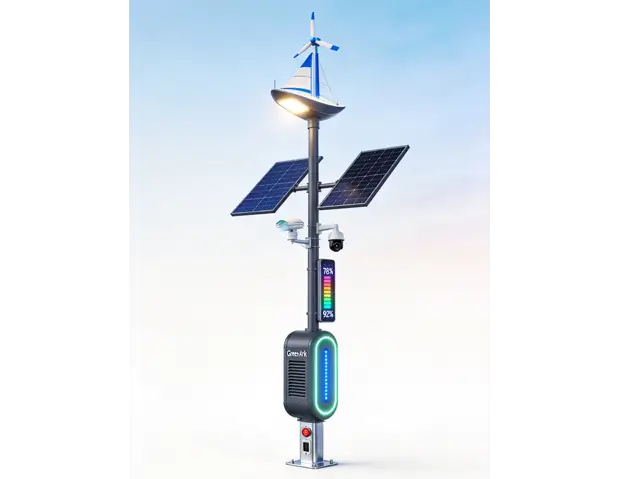
A buyer may also compare AP-MSCILH-PS with wind-solar hybrid smart street lights, but the products answer different project needs. AP-SSL-WSH-ES-GA combines bifacial monocrystalline 200W solar PV, a 300W vertical-axis micro wind turbine, AilumPower HZS-100-16S stacked 51.2V/100Ah storage, an 80W warm white LED head, a P3 vertical LED screen, PTZ camera, and 4G/5G plus RS485 communication. That product is not merely a lamp head. It is a smart pole route for projects that need lighting plus visible smart functions.
AP-SSL-WSH-ES-LOTUS is also a different category. It uses lotus-shaped 150W solar panels, AilumPower HZP Series 25.6V/100Ah storage, a 100W artistic spiral micro wind turbine, 50W center warm white LED, color-changing ambient lighting, a compact screen, and camera functions. It belongs in public-facing or landscape spaces, not in a standard road lamp head replacement file.
For AP-MSCILH-PS, packing should help the installer identify the lamp head route, battery group, controller, panel route, and mounting hardware without guessing. If one shipment includes AP-MSCILH-PS, AP-ISLH-CV, and AP-ISLH-CL products, each carton group should be separated by model and road zone. The receiving team should photograph one carton label and one product label from each group before moving goods to storage.
Delivery documents should also name the mounting height expectation. The AP-MSCILH-PS product route lists 6-10m mounting height. That does not mean every road in the project should use the same configuration. A narrower lane, a wider access road, and a parking edge may require different wattage and control choices. A mixed schedule is normal; an unclear schedule is the risk.
A road schedule for AP-MSCILH-PS should not only say how many lamp heads are needed. It should divide the project into road sections and give each section a power route, panel route, controller route, lighting time expectation, and mounting height. For example, a wider access road may need one of the higher 120-130W or 140-150W routes, while an internal road may be closer to the 80-90W range. The buyer should confirm this with the lighting designer or project engineer before issuing the purchase order.
The schedule should also state whether the project uses a mains backup path at every pole or only in selected zones. A mixed project is normal. A buyer may choose AP-MSCILH-PS for entrance roads and AP-ISLH-CV for independent solar sections. That is not a problem if the installation drawing and packing list separate the zones clearly. It becomes a problem when the warehouse receives several lamp head types with no road-section labeling and the installer has to identify them on site.
A mains-solar hybrid lamp head creates a different service routine from an integrated solar lamp head. AP-MSCILH-PS includes solar panel routes, MPPT controller routes, lithium iron phosphate battery groups, and mains support. If a light fails, the maintenance team should know whether to check the solar input, battery group, controller, mains connection, LED head, or mounting condition first. A project file that lists only “hybrid lamp head” will not be enough for later troubleshooting.
For a distributor or project contractor, this service routine should be considered at the purchase stage. Ask how spare units will be identified, how battery groups will be recorded, and whether the installation team will receive one product schedule per road section. If the buyer expects a long maintenance cycle, the extra documentation is worth doing before shipment. It reduces the chance that a later replacement order uses an integrated solar lamp head when the installed product was a mains-solar hybrid route.
For a municipal entrance road, the buyer may want consistent night lighting even when the solar contribution is reduced by weather, shade, or seasonal changes. In that setting, AP-MSCILH-PS can be reviewed because the mains route becomes part of the reliability plan. The buyer should still write down the expected wattage route, the solar panel route, the MPPT controller route, and the mounting height, because hybrid support does not remove the need for correct lighting design.
For a park service road, the decision may be different. If the road is narrow, if traffic is low, and if the site can accept a simpler integrated solar route, AP-ISLH-CV may be easier to install and maintain. For a pathway or courtyard, AP-ISLH-CL may be more practical than a higher-power hybrid lamp head. A good buyer does not force AP-MSCILH-PS into every area just because the project includes mains power somewhere. The product should follow the risk level of each zone.
Before installation is accepted, the project team should compare the delivered AP-MSCILH-PS units against the approved road schedule. The check should include lamp head model, power route, panel route, controller route, battery group, IP65 protection note, pole interface, and the expected 6-12h adjustable lighting plan. If the project includes both hybrid and integrated products, the installer should mark which sections received which model. That record will be more useful than a general installation photo when the buyer later orders spare units.
The buyer should also keep a small list of conditions that would trigger a specification review: road widening, higher pole height, added shading, a change from public road to industrial road, or a decision to add camera and display functions. Those changes may move the project away from AP-MSCILH-PS toward AP-SSL-WSH-ES-GA or another product route. Writing the triggers down prevents a repeat order from copying an old model into a changed site.
AP-MSCILH-PS should not be selected just because a project has grid power nearby. If the road section has simple lighting needs, stable solar exposure, and no requirement for mains support, AP-ISLH-CV may be easier for the installer and buyer to manage. If the area is only a path or small park edge, AP-ISLH-CL may be enough. If the buyer actually needs a camera, screen, and smart pole functions, then the project has moved beyond a lamp head and should be compared with AP-SSL-WSH-ES-GA or AP-SSL-WSH-ES-LOTUS instead.
This negative decision is useful for procurement teams. It keeps AP-MSCILH-PS for road sections where hybrid support answers a real reliability concern, while simpler lamp heads remain available for locations where lower cost, fewer parts, and faster maintenance are more important than mains backup.
It also helps the buyer keep spare parts organized, because hybrid lamp heads, integrated lamp heads, and smart poles should not share the same replacement shelf. The receiving label should name the road zone, not only the model.
For a long entrance road, that label can separate the higher-output AP-MSCILH-PS 140-150W route from a lower-output branch road route, so a later replacement does not put the wrong panel, battery group, or controller at the wrong pole height.
Use AP-MSCILH-PS when the project needs solar contribution but the road cannot accept the risk of solar-only operation. Use AP-ISLH-CV or AP-ISLH-CL when integrated solar lighting is enough and simpler maintenance matters more than mains support. Move to GA or LOTUS smart hybrid street lights only when the project also needs screens, cameras, wind power, visible public-space design, or communication functions. A buyer who separates these routes before pricing will have a cleaner order, fewer installation questions, and a more useful receiving record.
