

Get quote
Get Free Consultation!
We are ready to answer right now! free consultation.
Email:ttxxkj888@gmail.com

A buyer looking for an integrated solar lamp head supplier should begin with mounting height, lighting zone, wattage, battery, and panel size. AilumPower’s AP-ISLH-CV Integrated Solar Lamp Head covers 60W, 80W, and 120W routes for 6m to 12m road planning. AP-ISLH-CL covers 10W and 15W lower-power routes for small outdoor areas. AP-MSCILH-PS belongs in the review when the buyer needs mains-solar hybrid support rather than a fully integrated solar-only lamp head.
The first item to confirm is the pole height range. If a buyer only asks for an integrated lamp head price, the supplier still does not know whether the project is a walkway, an 8m campus road, a 10m road, or a 12m road route.
Lighting references connect pole height, road width, spacing, and fixture distribution. A product page cannot replace a lighting design, but it can give the buyer the correct product route before the design is finalized. AP-ISLH-CV01 is recommended for 6m/8m mounting, AP-ISLH-CV02 for 8m/10m, and AP-ISLH-CV03 for 10m/12m. That ladder makes the CV series the starting point for road, campus, and park roads where stronger integrated solar lighting is needed.
If the buyer’s project is a smaller path or courtyard, AP-ISLH-CL may be more practical. If the project is a road with mains availability and a need for more operating assurance, AP-MSCILH-PS should be compared. The supplier review should not force all three routes into one price table.
AP-ISLH-CV01 is a 60W product with DC12V system voltage, 12.8V/96Ah lithium battery, and 140W/12V monocrystalline solar panel. AP-ISLH-CV02 is an 80W route with DC24V system voltage, 25.6V/72Ah battery, and 275W/36V panel. AP-ISLH-CV03 is a 120W route with DC24V system voltage, 25.6V/108Ah battery, and 275W/36V panel. All three use batwing light distribution of 150 degrees by 75 degrees, IP65 protection, IK08 rating, and CRI of at least Ra70.
AP-ISLH-CL is not a smaller version of every road light. It answers a different job. AP-ISLH-CL01 is a 10W route with 3.2V/36Ah lithium battery and a 33W/5V solar panel. AP-ISLH-CL02 is a 15W route with 3.2V/72Ah battery and a 50W/5V solar panel. The product route suits pathway, small garden, small campus edge, and low-load lighting areas where a larger CV product may be unnecessary.
A buyer should be careful when a quotation uses CL products for roads that actually need CV mounting heights or stronger output. Lower wattage can be appropriate, but only when the road zone and lighting task support it.
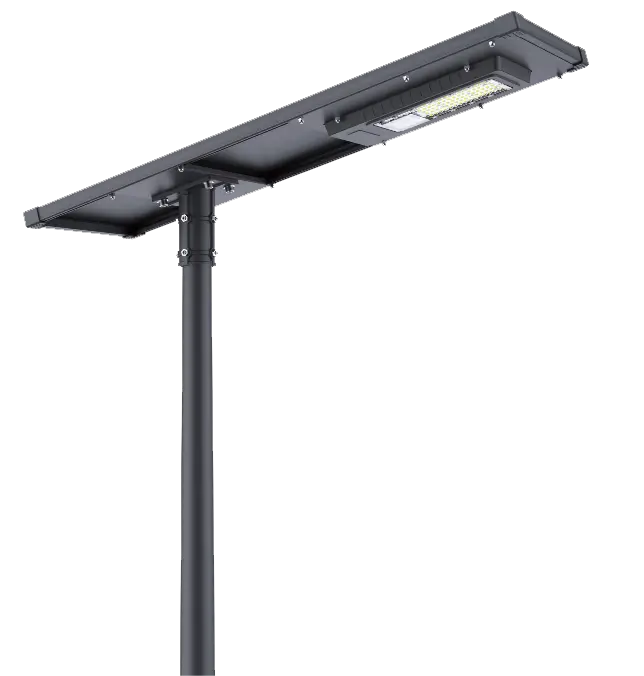
The AP-MSCILH-PS Mains-Solar Hybrid Lamp Head is often compared with integrated solar lamp heads, but it solves a different procurement problem. It covers 60-70W, 80-90W, 100-110W, 120-130W, and 140-150W routes. It uses LiFePO4 battery groups, SRNE MPPT controller routes, 18V monocrystalline solar panel routes, 6000K color temperature, IP65 protection, 82mm diameter, and 6-10m mounting height. It also offers 6-12h adjustable lighting time.
Use this route when solar contribution is useful but the buyer wants mains-supported lighting. Do not use it as a default substitute for AP-ISLH-CV or AP-ISLH-CL when the project can be handled by a simpler integrated solar lamp head.
The adjustable lighting time on AP-MSCILH-PS should be written into the project file. A buyer who needs a road to stay lit through longer operating windows should not compare the product only by wattage. The battery group, controller, panel, and mains support need to be approved together.
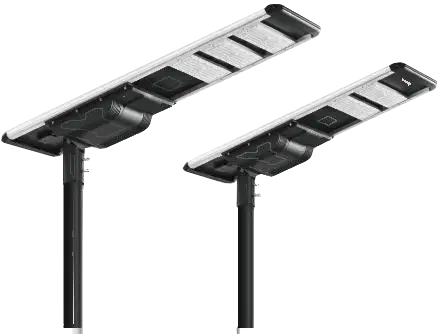
A clean supplier document should not list wattage alone. For AP-ISLH-CV, the buyer should see product model, rated power, system voltage, battery voltage and capacity, solar panel route, mounting height, product weight, package size, pipe diameter, light distribution, IP rating, and CCT options. For AP-ISLH-CL, the buyer should see whether the product is CL01 or CL02, because 10W with a 33W panel is not the same purchase as 15W with a 50W panel.
A contractor installing lights on a campus road may need AP-ISLH-CV02 in one section and AP-ISLH-CL02 on a path nearby. If the packing list only says “solar lamp head,” the receiving team may store products together and create installation confusion. A model-by-zone receiving record prevents that problem.
AP-ISLH-CV products are larger and heavier than small path lamp heads, and the packaging record should reflect that. CV01 lists a product size of 1390 x 590 x 155mm and package size of 1467 x 660 x 240mm. CV02 and CV03 list product size of 2000 x 770 x 155mm and package size of 2077 x 840 x 240mm. Product weights are 28.1kg for CV01, 52.3kg for CV02, and 60.1kg for CV03. These values matter when the buyer plans unloading, storage, and site movement.
A replacement record should show which CV model was installed at each pole-height route. A later service team may know only that the site used an integrated solar lamp head, but that phrase is not enough to order a replacement. The buyer needs the exact CV model, battery route, panel route, mounting pipe diameter, and road section.
AP-ISLH-CV03 is a 120W route with a larger product size, 25.6V/108Ah battery, 275W/36V panel, and 10m/12m recommended mounting height. AP-ISLH-CL02 is a 15W compact path-light route with 3.2V/72Ah battery and 50W/5V panel. A warehouse should not treat those cartons as variations of the same lamp head. The receiving sheet should identify them before they are moved to the installation area.
AP-ISLH-CV lists batwing light distribution of 150 degrees by 75 degrees and CCT choices of 3000K, 4000K, 5700K, and 6500K. Those values should be approved before shipment because they affect how the lighting feels on the actual road or campus. A warm road near a park entrance may not need the same color temperature as a security-oriented factory road. A buyer should keep the CCT choice in the project file rather than leaving it as an informal decision.
The same principle applies to lower-power CL products. Even when the wattage is small, light distribution, color, mounting position, and battery route should match the path or courtyard. The buyer should treat integrated lamp head selection as a project decision, not only a product purchase.
| Buyer need | AilumPower route | Specific details to check | When not to use it |
|---|---|---|---|
| Road or campus route from 6m to 12m | AP-ISLH-CV01/CV02/CV03 | 60W, 80W, 120W; battery and panel matched by model | Small path lighting can use a lower-power route |
| Path, courtyard, small park area | AP-ISLH-CL01/CL02 | 10W/15W, 3.2V battery route, 33W or 50W panel | Wide road or higher pole installation is required |
| Road needing solar plus mains support | AP-MSCILH-PS | 60-150W groups, LiFePO4 batteries, MPPT controller, 6-10m mounting | Fully solar-only integrated lamp head is enough |
| Lighting plus camera, screen, wind, and public functions | GA or LOTUS smart hybrid street light | PV, turbine, storage, display, camera, sensor route | The buyer only needs a lamp head |
If the project needs only light, a lamp head route is usually easier. If the project needs a camera, LED screen, environmental monitoring, wind-solar public demonstration, ambient color, or visible landscape design, then the buyer should compare AP-SSL-WSH-ES-GA or AP-SSL-WSH-ES-LOTUS. Those are smart pole products, not simply larger lamp heads.
A buyer should make that decision before requesting production support. Otherwise the supplier may quote lamp heads while the public project actually needs smart poles, or quote smart poles for a location where a smaller integrated solar lamp head would be cleaner. The best integrated lamp head purchase is one where pole height, road zone, wattage, battery, panel, and service record all match the real lighting task.
Pipe diameter and product weight are easy to miss in an early price review, but they matter on site. AP-ISLH-CV01 lists a pipe diameter of 89mm, while CV02 and CV03 list 102mm. The larger CV02 and CV03 products also carry much higher weights than small CL products. If the pole interface is not checked before shipment, the installer may discover the mismatch only when the lamp heads are already at the site.
The buyer should ask the installer to confirm the pole top, arm, or mounting interface before approving mixed CV and CL orders. A campus project may have old poles in one zone and new poles in another. The same integrated lamp head supplier can support the project, but the purchase file must show which product route fits each pole group.
An 89mm pipe route for CV01 and a 102mm route for CV02 or CV03 can change the mounting adapter, installation labor, and replacement stock. The receiving team should keep that information visible on the carton group and the site schedule. A later replacement order should name the pipe route along with the model, not only the wattage.
The same receiving sheet should include product weight. CV01, CV02, and CV03 have different handling requirements, and a site team may need more people or equipment for the larger models. If the buyer has narrow access roads, stairs, temporary storage limits, or a remote installation zone, these practical details can matter as much as the lamp output.
For AP-ISLH-CL, the small-product route should also be documented. CL01 and CL02 are easier to move, but they should still be tied to the correct path or courtyard zone. A mixed project that receives CL and CV products in one shipment should keep model groups separate from the first receiving step.
Before shipment, the buyer should ask the installer to confirm pole interface, height, road zone, and replacement strategy. That extra confirmation reduces the risk of receiving a technically correct product that does not fit the actual pole route.
For distributors, that same confirmation can be used to build stocking groups: compact CL lamp heads for paths, CV01 for lower road routes, and CV02 or CV03 for taller road installations. This makes the supplier order easier to explain to installers who may not have seen the original project drawings.
If the buyer is replacing older lighting, the old pole photo should not be the only evidence. A measurement of pole top, mounting height, and existing arm condition gives the supplier a much better basis for choosing the integrated solar lamp head route.
For a new road, the same information should come from the drawing package. For a replacement road, it should come from the installed pole record and site measurement. Either way, the supplier needs more than a wattage target to match the lamp head correctly.
That protects both delivery and installation.
