

Get quote
Get Free Consultation!
We are ready to answer right now! free consultation.
Email:ttxxkj888@gmail.com

AP-ISLH-CL vs AP-ISLH-CV solar lamp head selection matters when one project includes small pedestrian areas and stronger road lighting sections. AP-ISLH-CL is a lower-power integrated solar lamp head route, with 10W and 15W options for parks, pathways, campuses, courtyards, and similar areas. AP-ISLH-CV is the route to review when the project needs 60W, 80W, or 120W integrated solar lamp heads for roads, park roads, and campus roads. A buyer should not pick one product family for the whole site simply because both are integrated solar lamp heads.
The first question is the lighting zone. If the site has a walking path, a courtyard, and a road entrance, each zone may need a different product route even though the buyer wants one supplier and one project schedule.
AP-ISLH-CL includes AP-ISLH-CL01 and AP-ISLH-CL02. The rated power options are 10W and 15W. The battery options are 3.2V/36Ah and 3.2V/72Ah, and the solar panel routes are 33W/5V and 50W/5V high-efficiency monocrystalline panels. The product data also lists 3030/5050 light source and batwing light distribution of 150 degrees x 75 degrees. That makes CL a compact route for lower-power lighting areas.
AP-ISLH-CV includes AP-ISLH-CV01, AP-ISLH-CV02, and AP-ISLH-CV03. It covers 60W, 80W, and 120W rated power. CV01 uses DC12V, while CV02 and CV03 use DC24V. The battery options are 12.8V/96Ah, 25.6V/72Ah, and 25.6V/108Ah, with 140W/12V or 275W/36V monocrystalline solar panel options. It also lists IP65 and IK08 protection ratings. That makes CV a stronger road-lighting route.
A small path may need clear pedestrian lighting, not a 60W to 120W road package. If the buyer uses AP-ISLH-CV everywhere, the order may cost more, weigh more, and create a larger installation route than the area needs. AP-ISLH-CL keeps the lower-power zones simpler.
A campus road or park road may need more lighting output, a stronger battery route, and higher panel capacity. If the buyer chooses AP-ISLH-CL only because it is a smaller product, the road section may not match the owner’s lighting expectation.
AP-ISLH-CL is useful where the buyer needs a clean integrated solar lamp head for smaller areas. A walkway near a school building, a courtyard edge, a low-traffic park section, or a campus path can be a good match. The 10W and 15W power options, 3.2V battery route, and 33W/5V or 50W/5V panels make sense when the lighting requirement is modest.
That does not mean CL is a weak product. It means its job is specific. A purchaser should record CL01 or CL02, 10W or 15W rated power, battery capacity, solar panel route, and intended zone. That record keeps a lower-power product from being accidentally installed in a road section that was planned for a stronger lamp head.
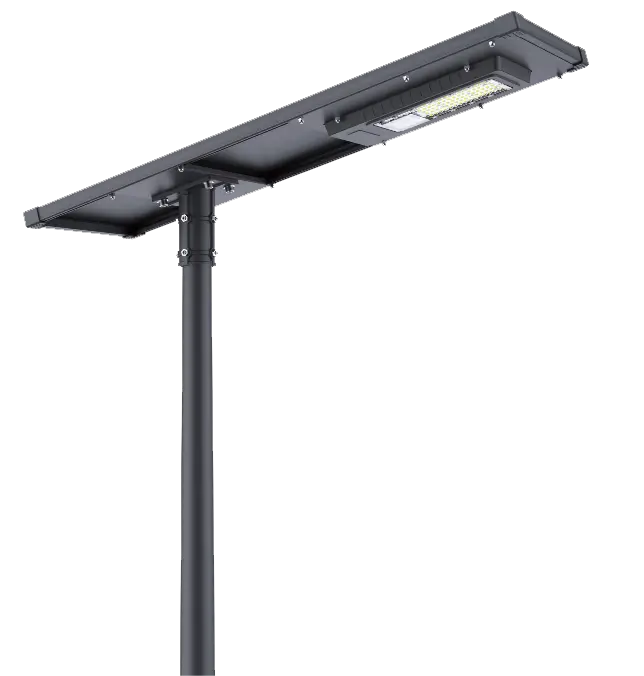
AP-ISLH-CV should be reviewed when the buyer needs a stronger integrated solar lamp head. CV01, CV02, and CV03 create a clear product ladder: 60W, 80W, and 120W. The move from DC12V on CV01 to DC24V on CV02 and CV03 should be visible in the technical record. So should the battery route: 12.8V/96Ah, 25.6V/72Ah, or 25.6V/108Ah.
A municipal road buyer or campus road contractor should not treat 60W, 80W, and 120W as only price choices. The fixture role, road width, expected operating schedule, battery route, and solar panel route should be written together. That makes the CV order easier to inspect and easier to maintain after installation.
| Project zone | Better first product to review | Reason | When it may not fit |
|---|---|---|---|
| Park path or courtyard | AP-ISLH-CL | 10W and 15W routes match lower-power areas | Not enough for road sections needing 60W or higher |
| Campus road or park road | AP-ISLH-CV | 60W, 80W, and 120W routes support stronger lighting | May be excessive for small pedestrian zones |
| Mixed site with paths and road sections | CL and CV together | Lets each zone receive a suitable lamp head | Requires a clearer delivery and zone schedule |
| Road with grid support requirement | AP-MSCILH-PS | Mains-solar hybrid support belongs in another product route | Not needed where integrated solar lighting is enough |
Some buyers compare AP-ISLH-CL and AP-ISLH-CV but actually need a mains-solar hybrid lamp head. AP-MSCILH-PS has 60-70W, 80-90W, 100-110W, 120-130W, and 140-150W power routes. It also lists 12.8V lithium iron phosphate battery groups from 28Ah/32Ah to 60Ah/64Ah, SRNE MPPT controller routes, 18V monocrystalline solar panel routes, 6-12h adjustable lighting time, IP65 protection, 82mm diameter, and 6-10m mounting height.
If a road has existing mains access and the buyer wants solar savings without relying only on solar power, AP-MSCILH-PS should be reviewed separately. It should not be squeezed into a CL versus CV comparison. The buyer should name it as a hybrid lamp head route and write the power, controller, panel, battery, and mounting height details in the road schedule.
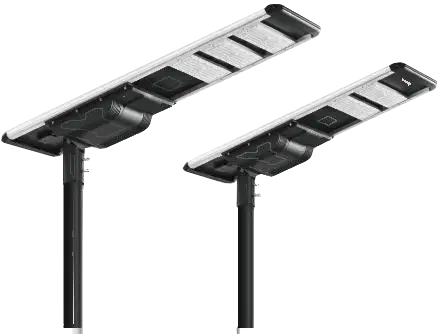
A mixed lighting project should be divided by zone. The buyer can use AP-ISLH-CL for smaller paths, AP-ISLH-CV for road and campus-road sections, and AP-MSCILH-PS where mains-solar hybrid support is required. The purchase file should name the product route for each zone, not only the total quantity of lamp heads.
This is especially important for distributors and contractors. If the order is packed together, CL and CV cartons may arrive at the same site. The receiving team should know which zone receives CL01 or CL02 and which zone receives CV01, CV02, or CV03. The installation schedule should prevent smaller lamp heads from being sent to road sections and stronger lamp heads from being wasted on low-power paths.
The final decision should show the zone, model, rated power, voltage route, battery route, panel route, protection requirement, and delivery label. For AP-ISLH-CL, that means CL01 or CL02 with 10W or 15W and the correct 3.2V battery and panel route. For AP-ISLH-CV, that means CV01, CV02, or CV03 with 60W, 80W, or 120W and the correct DC12V or DC24V route. A clean order does not force one product into every zone. It uses each lamp head where its specifications make sense.
The bill of quantities should not list only the total number of integrated solar lamp heads. It should split AP-ISLH-CL and AP-ISLH-CV by zone, model, power, and energy route. A line for AP-ISLH-CL01 or CL02 can sit under pathway, courtyard, or campus-edge lighting. A line for AP-ISLH-CV01, CV02, or CV03 can sit under road, park road, or campus road lighting. This makes procurement clearer before price comparison begins.
If a distributor is supplying both product families, the quote should also separate spare parts and replacement logic. A CL spare should not be stored as a generic integrated lamp head spare if the same warehouse also holds CV models. The stock record should keep the model name and site zone together.
On a mixed site, cartons may arrive before the installation crew has walked every zone. The buyer can reduce mistakes by putting zone labels on the delivery plan: pathway CL, courtyard CL, road CV, campus road CV, and hybrid road PS where needed. Those labels are simple, but they stop the crew from choosing a lamp head by carton size or visual impression.
This matters because both CL and CV are integrated solar lamp heads, yet they answer different lighting problems. The CL route is smaller and easier for lower-power areas. The CV route carries stronger wattage and larger battery and panel choices. A good installation handoff keeps those differences visible until the last pole is installed.
After installation, the buyer may keep spare lamp heads for maintenance. AP-ISLH-CL spares should be labeled for lower-power zones such as pathways, courtyards, and campus edges. AP-ISLH-CV spares should be labeled by CV model and road section. A 10W or 15W CL spare should not be stored as if it could replace a 60W, 80W, or 120W CV route.
The spare stock record should include model, rated power, battery route, panel route, and intended zone. That prevents a night-time repair from becoming a quick visual swap that changes the lighting performance of the site. For distributors, this also helps avoid shipping the wrong spare part to a contractor who only asks for an “integrated solar lamp head.”
AP-ISLH-CL and AP-ISLH-CV are lamp head decisions. If the buyer needs screen, camera, wind generation, landscape display, or smart public-space functions, the project is moving into a different product conversation. AP-SSL-WSH-ES-GA and AP-SSL-WSH-ES-LOTUS combine lighting with wind-solar hybrid design, energy storage, and smart functions. They should not be reduced to a CL or CV lamp head comparison.
A mixed public project may use CL products on paths, CV products on roads, and smart poles at entrances or scenic nodes. That is a healthier structure than asking one product family to cover every task. The purchase file should make the boundary visible before the order is approved.
After installation, the owner should keep a zone sheet that names the lamp head family, model, rated power, battery route, solar panel route, and installed location. For CL zones, that sheet may be short because the lighting route is smaller. For CV zones, it should show whether the project used CV01, CV02, or CV03 and the matching voltage and battery route.
This record helps later when a contractor adds another path, extends a campus road, or replaces damaged fixtures. The owner can repeat the correct product route instead of asking for a vague solar lamp head that may not match the installed system.
A zone sheet also makes warranty and service conversations clearer. If a problem happens in a pathway area, the buyer can refer to the CL model and its lower-power route. If the problem happens on a road section, the buyer can refer to the CV model, wattage, battery route, and panel route. The discussion begins with the installed product, not with a general complaint about solar lighting.
For contractors, this reduces return visits. The team can bring the right lamp head family and the right spare part on the first service trip because the original CL versus CV decision is still visible.
That is a practical benefit for projects where the same contractor maintains both pedestrian areas and road sections across several operating seasons. It keeps CL and CV replacement stock tied to the original lighting zones and installed model records for future service.
