

Get quote
Get Free Consultation!
We are ready to answer right now! free consultation.
Email:ttxxkj888@gmail.com
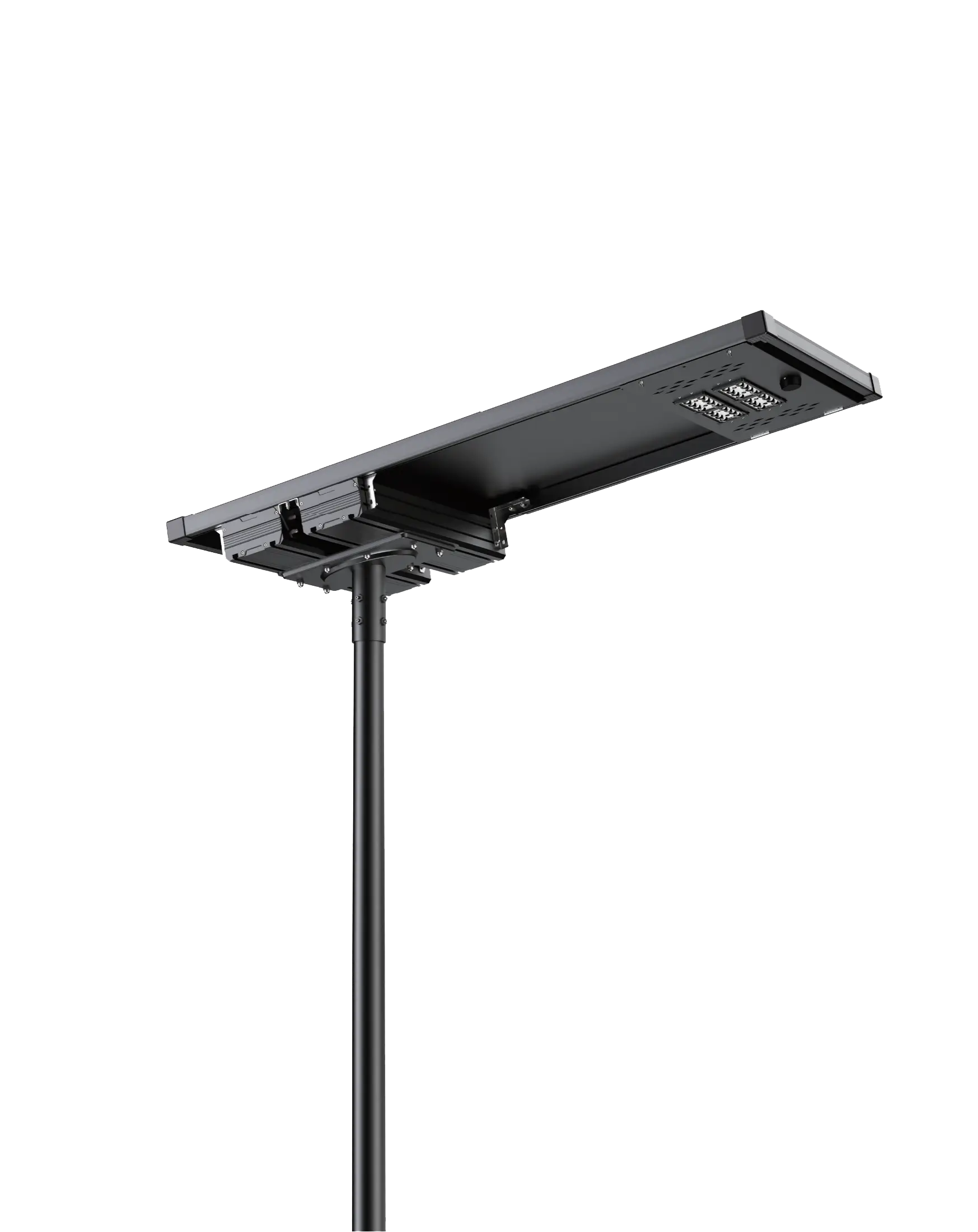
A buyer searching for a solar street light manufacturer should begin with the project zone, not with a single wattage request. AilumPower’s solar lighting range includes AP-ISLH-CV integrated solar lamp heads for 60W, 80W, and 120W road routes, AP-ISLH-CL integrated solar lamp heads for lower-power path and small-area lighting, AP-MSCILH-PS mains-solar hybrid lamp heads for roads that need grid-supported operation, and wind-solar hybrid smart street lights for projects that also need cameras, screens, sensors, or visible public-space design.
The first item to confirm is whether the project is a road lighting order, a park or campus order, a replacement lamp head order, or a smart pole order. Those orders may all use the phrase “solar street light,” but they do not need the same product or the same approval file.
Public lighting references generally treat road width, mounting height, spacing, glare, and uniformity as connected design choices. That logic matters for procurement because a supplier review should not begin with one catalog wattage for the whole site. AilumPower’s AP-ISLH-CV route gives recommended mounting heights of 6m/8m for CV01, 8m/10m for CV02, and 10m/12m for CV03. The same series lists batwing light distribution of 150 degrees by 75 degrees, IP65 protection, IK08 impact rating, and LED life over 50000 hours.
For a road, the manufacturer review should connect fixture power, mounting height, pole condition, road width, and lighting time. For a park, the review should also consider appearance, lower mounting routes, pedestrian comfort, and whether a smart decorative pole is part of the project. For a campus, the buyer may need a mixed schedule: stronger lighting for entrances, simpler integrated lamp heads for internal paths, and smart pole functions near public gathering areas.
The AP-ISLH-CV product route is useful because it gives a clear mounting-height ladder. CV01 is a 60W route with DC12V system voltage, 12.8V/96Ah battery, and 140W/12V solar panel. CV02 is an 80W route with DC24V system voltage, 25.6V/72Ah battery, and 275W/36V panel. CV03 is a 120W route with DC24V system voltage, 25.6V/108Ah battery, and 275W/36V panel. A buyer should not finalize the quantity before the road section and mounting height are separated.
AP-ISLH-CV and AP-ISLH-CL are integrated solar lamp head routes. They suit projects where the buyer wants a compact solar lighting product and can approve the power, battery, panel, mounting height, and road zone together. AP-ISLH-CL is much smaller: CL01 and CL02 are 10W and 15W routes with 3.2V/36Ah and 3.2V/72Ah lithium battery options. They belong in pathways, small park edges, or compact lighting zones rather than wide roads.
AP-MSCILH-PS Mains-Solar Hybrid Lamp Head belongs in another conversation. It covers 60-70W through 140-150W power routes, LiFePO4 battery groups, SRNE MPPT controller routes, 18V monocrystalline solar panel routes, 6-12h adjustable lighting time, IP65 protection, and 6-10m mounting height. It is useful when the road needs solar contribution but the buyer also wants a mains-supported operating path.
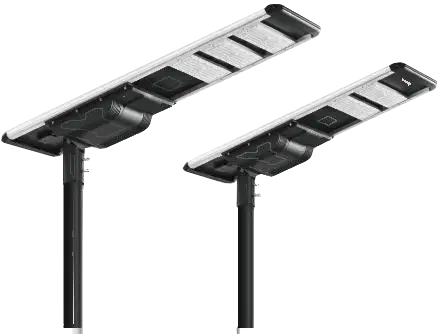
A park pathway buyer may care most about pedestrian safety, appearance, low maintenance, and keeping the fixture scale appropriate. AP-ISLH-CL may be enough for small zones. A campus road buyer may need AP-ISLH-CV for internal vehicle roads and AP-MSCILH-PS where grid support is useful. A factory road buyer may need stronger light output, better documentation, and clear installation labels for repeated maintenance.
A buyer should send the manufacturer a zone list, not only a total quantity. The list should state road type, mounting height, pole style, lighting hours, shade conditions, and whether smart functions are required. Without that list, a manufacturer can quote products, but the order may not match the site.
A park path may not need an 80W or 120W road lamp head. AP-ISLH-CL01 and CL02 are lower-power integrated solar routes that can fit smaller lighting tasks. If the buyer uses main-road product logic on a narrow path, the project may pay for unnecessary power, larger parts, and more difficult installation.
A factory road may look simple at the purchasing stage, but later maintenance crews need to know which model, battery, panel, and mounting height were installed in each section. A buyer should keep the AP-ISLH-CV or AP-MSCILH-PS route visible in the delivery record so a later replacement order does not depend on memory or a partial site photo.
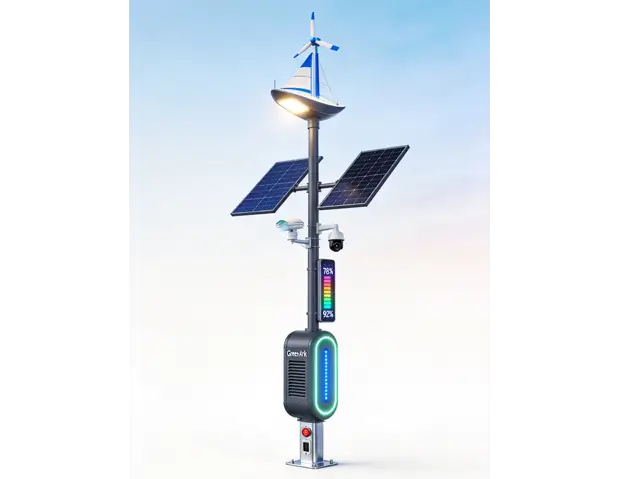
If the project includes cameras, screens, environmental sensors, wind input, or visible landscape design, the buyer is no longer reviewing only a solar lamp head. AP-SSL-WSH-ES-GA includes bifacial monocrystalline 200W solar PV, AilumPower HZS-100-16S stacked 51.2V/100Ah storage, a 300W vertical-axis micro wind turbine, 80W warm white lighting, P3 320 x 640mm LED screen, 400W HD PTZ camera, temperature, humidity, PM2.5, and noise sensors, and 4G/5G plus RS485 communication.
AP-SSL-WSH-ES-LOTUS is more decorative and public-space oriented. It uses lotus-shaped 150W solar panels, AilumPower HZP Series 25.6V/100Ah storage, a 100W artistic spiral micro wind turbine, 50W center warm white LED, color-changing petal ambient lighting, a P4 compact LED screen, and PTZ camera functions. A park plaza or scenic road may compare LOTUS, while a utility-style smart road may compare GA.
| Project input | Why the manufacturer needs it | AilumPower route affected |
|---|---|---|
| Road width and mounting height | Helps select AP-ISLH-CV01, CV02, CV03, or another route | AP-ISLH-CV, AP-MSCILH-PS |
| Pathway, park, campus, or factory zone | Prevents low-power path lights from being treated like road lights | AP-ISLH-CL, AP-ISLH-CV |
| Grid availability and lighting continuity requirement | Shows whether mains-solar hybrid support is useful | AP-MSCILH-PS |
| Camera, screen, sensor, or public-space design need | Moves the project from lamp head selection to smart pole review | GA, LOTUS |
When solar street lights arrive at the project warehouse, the receiving team should not only count cartons. The cartons should be separated by road zone and product route. AP-ISLH-CV products should be checked against the approved 60W, 80W, or 120W route. AP-ISLH-CL products should be kept with smaller path or courtyard zones. AP-MSCILH-PS products should be separated when the road section uses mains-solar hybrid operation. If GA or LOTUS smart poles are part of the same project, those goods should be checked as smart pole systems, not as ordinary solar lamps.
This matters because many installation mistakes happen after the products have already arrived safely. A warehouse team may move similar-looking cartons together, and the installer may later pick the wrong product for a road section. A simple receiving sheet that lists zone, model, power, battery, panel, and mounting height helps prevent that problem.
For AP-ISLH-CV, the battery and panel should stay paired with the model. CV01 uses a 12.8V/96Ah battery and 140W/12V panel. CV02 uses a 25.6V/72Ah battery and 275W/36V panel. CV03 uses a 25.6V/108Ah battery and 275W/36V panel. If the buyer approves only the lamp wattage, the installer may not see the full energy route that supports the lighting plan.
Smart pole functions can be valuable, but they should not be added without a reason. A camera may be useful at a factory entrance. A screen may be useful in a park or public road. Environmental sensors may matter in a smart-city demonstration area. USB and wireless charging may be useful in a campus or tourist space. These functions belong in the project brief before the manufacturer quote is finalized.
If the project only needs reliable road lighting, AP-ISLH-CV or AP-MSCILH-PS may be easier to approve and service. If the project needs public monitoring, screen display, and hybrid renewable input, GA or LOTUS can be reviewed as smart public-lighting products. The buyer should make that decision before asking for production support, because it changes pole design, wiring, energy storage, and service documentation.
A buyer should split the order when the site has more than one lighting task. A factory entrance road, internal branch road, parking path, and guardhouse area may need different products. A park may need low-power path lighting, stronger access road lighting, and one or two smart poles near public areas. A campus may need simple lamp heads in quiet areas and smart hybrid poles near entrances. Splitting the order by zone may look slower at first, but it prevents a single product from being forced into locations where it does not belong.
The supplier approval is strongest when every line item names the zone, product route, model, power, battery, solar panel, mounting height, and reason for selection. That is how a solar street light manufacturer review becomes a real project file instead of a catalog exercise.
A good project file remains useful after installation. When a lamp head fails, a pole is damaged, or a road section is extended, the buyer should not need to rebuild the entire product decision from photographs. The file should name AP-ISLH-CV01, CV02, CV03, AP-ISLH-CL01, CL02, AP-MSCILH-PS, GA, or LOTUS by zone. It should also name the battery, panel, mounting height, and any smart functions that were included.
This matters for distributors and engineering contractors. A distributor can ship the right replacement faster when the original zone record is clear. A contractor can avoid installing a lower-power lamp head on a road section that originally used a higher mounting route. A project owner can compare future expansion with the original lighting plan instead of starting again with only a product photo.
For a road extension, the old record also helps the buyer decide whether to repeat the same AP-ISLH-CV model or change the route. If the new section has a different pole height, shade condition, or road width, copying the old model may not be correct. The supplier can support a cleaner comparison when the original product data is available.
For a park or campus, replacement records also help separate decorative areas from vehicle routes. A small path may repeat AP-ISLH-CL, while the entrance road may stay with AP-ISLH-CV or AP-MSCILH-PS. Keeping those routes visible protects the project from one-size-fits-all replacement orders.
The same record can also guide future expansion. If the project adds a new parking lane, guardhouse road, or walkway, the buyer can compare the new zone with the existing product route instead of asking the manufacturer to guess from a site description.
That keeps the next order grounded in the installed road conditions, not only in a fresh product list.
It also helps the installer avoid repeating an old mismatch.
