

Small 12V Gel Battery for Solar Lighting: How Buyers Should Size Compact Orders

Small 12V Gel Battery for Solar Lighting: How Buyers Should Size Compact Orders
A small 12V gel battery for solar lighting is usually ordered when the project does not need a heavy 100Ah, 150Ah, 200Ah, or 250Ah battery. Buyers may be supplying courtyard lights, smaller pole-base boxes, pathway lighting, replacement stock, compact UPS cabinets, or distributor inventory where weight and case size matter as much as capacity. AilumPower’s smaller 12V gel battery range includes 12V24AH, 12V38AH, 12V50AH, 12V60AH, 12V65AH, 12V70AH, 12V80AH, and 12V120AH product pages, so the purchase decision should not stop at one generic “12V battery” line.
The first thing to confirm is the real enclosure and handling condition. A 7.3kg 12V24AH battery and a 24.5kg 12V80AH battery may both be part of solar lighting work, but they do not create the same installation, storage, or replacement plan.
Small 12V gel battery for solar lighting starts with enclosure size
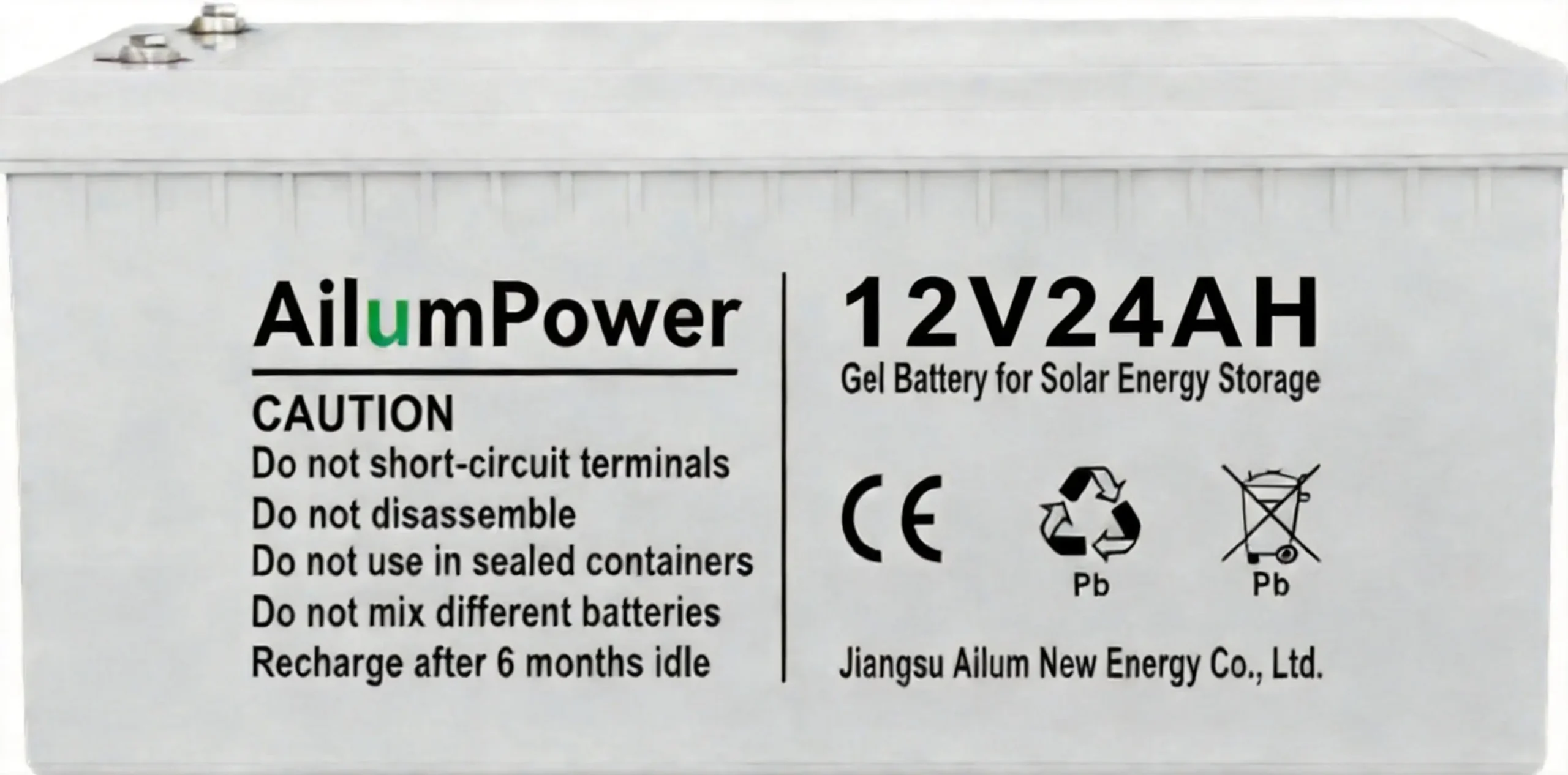
For compact lighting projects, the battery box can decide the order before runtime calculations are finished. The AilumPower 12V24AH Gel Battery lists 12V rated voltage, 24Ah rated capacity at 10hr, 1.80V/cell, 25C, a 7.3kg weight, and 175 x 166 x 125mm dimensions. That product belongs in the conversation when the buyer needs a small battery that can fit into a limited box and be handled without heavy lifting equipment.
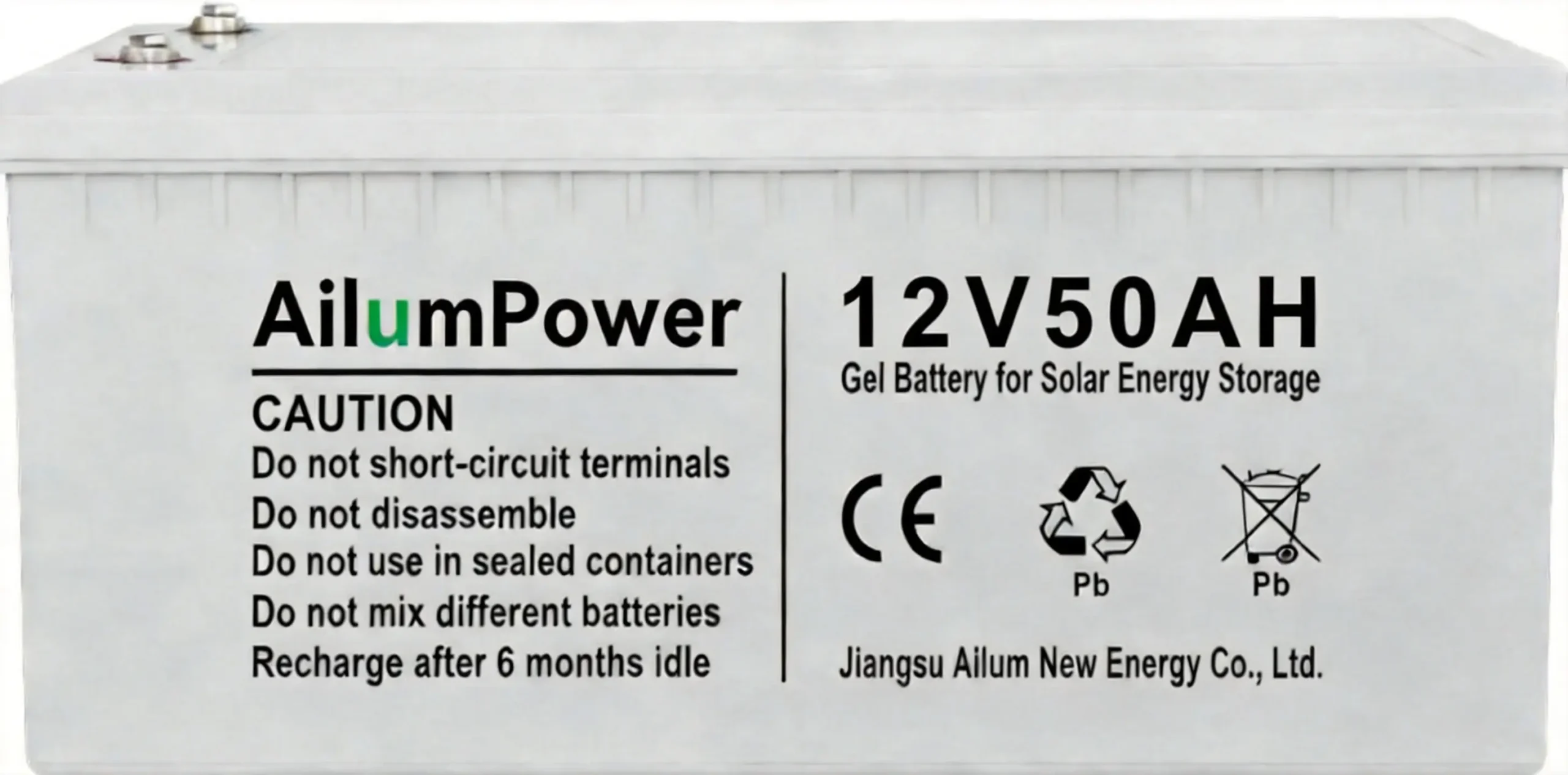
The 12V38AH Gel Battery increases capacity to 38Ah, with 11.5kg weight and 195 x 164 x 173mm dimensions. The 12V50AH Gel Battery moves to 50Ah, 14.5kg, and 227 x 137 x 215mm dimensions. A distributor should keep these three steps separate because each one changes the space, lifting, and replacement logic of a small solar lighting order.
Courtyard lighting orders often need the case size before the capacity is approved
A buyer replacing batteries in small courtyard or pathway lights may already have fixed battery boxes. If the enclosure was designed for a smaller battery, stepping from 24Ah to 50Ah may not be possible even if the runtime target looks attractive. The purchase file should include dimensions, not only capacity.
Distributor stock should separate 24Ah, 38Ah, and 50Ah cartons clearly
A distributor that stores small gel batteries for many lighting customers should label cartons by capacity, weight, and dimensions. If the warehouse only separates “small 12V batteries” from “large 12V batteries,” the wrong case size can be shipped to a replacement site.
Where 60Ah and 65Ah gel batteries fit in compact solar lighting orders
The AilumPower 12V60AH Gel Battery lists 60Ah rated capacity, 18.5kg weight, and 326 x 171 x 167mm dimensions. The 12V65AH Gel Battery lists 65Ah rated capacity, 19kg weight, and the same 326 x 171 x 167mm dimensions. These two products are useful when the buyer wants more capacity than a 50Ah battery but still wants to avoid the size and weight jump of larger batteries.
Because 60Ah and 65Ah share the same listed dimensions, the buyer should not assume the difference is only visual. The carton label and the purchase record should show the actual capacity and weight. If the installation team expects one capacity and receives the other, the project may still be physically installable, but the runtime expectation and replacement record become unclear.
| Product | Rated capacity | Weight | Dimensions | Best-fit buying situation |
|---|---|---|---|---|
| 12V24AH Gel Battery | 24Ah | 7.3kg | 175 x 166 x 125mm | Very compact lighting boxes and small replacement stock |
| 12V38AH Gel Battery | 38Ah | 11.5kg | 195 x 164 x 173mm | Compact lighting orders needing more reserve than 24Ah |
| 12V50AH Gel Battery | 50Ah | 14.5kg | 227 x 137 x 215mm | Small solar lighting and backup cabinets with taller space |
| 12V60AH / 12V65AH Gel Battery | 60Ah / 65Ah | 18.5kg / 19kg | 326 x 171 x 167mm | Mid-small capacity orders where case length is acceptable |
70Ah and 80Ah gel batteries belong between compact stock and heavy runtime orders
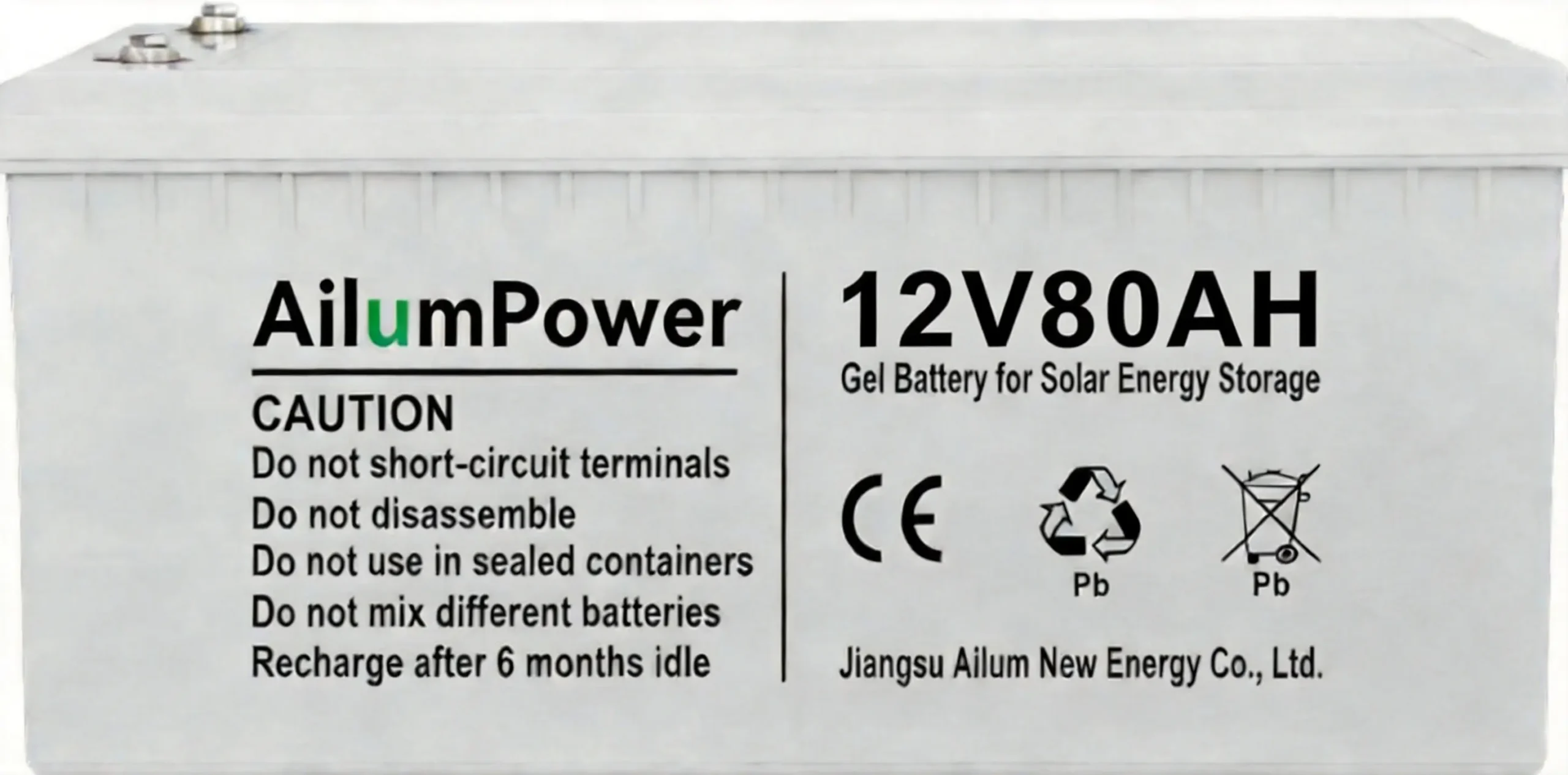
The AilumPower 12V70AH Gel Battery lists 70Ah capacity, 22.5kg weight, and 330 x 171 x 215mm dimensions. The 12V80AH Gel Battery lists 80Ah capacity, 24.5kg weight, and the same 330 x 171 x 215mm dimensions. These two batteries are still much easier to handle than 55.5kg or 65.5kg large-capacity gel batteries, but they are no longer light replacement items.
A contractor replacing batteries along a small road or garden route may use 70Ah or 80Ah when the old enclosure has enough height and the buyer wants more runtime than the 50Ah to 65Ah group. The receiving team should check whether cartons are labeled by capacity because the same dimensions can hide different capacities.
Charge voltage and storage rules still apply to small 12V gel battery orders
Small capacity does not remove charge management. The AilumPower gel battery pages list maximum charge current no more than 0.25C10, self-discharge no more than 3% per month at 25C, float charge voltage of 13.5V-13.8V, and equalize voltage of 14.4V-14.8V. These values should travel with the order because small lighting batteries may sit in a warehouse before the project is ready.
The operating condition pages list temperature ranges of discharge -45C to 50C, charge -20C to 45C, and storage -30C to 40C. A buyer stocking 12V24AH to 12V80AH batteries should record storage date and carton condition. That record is especially useful when compact replacement batteries are ordered ahead of installation and issued in smaller batches.
When 12V120AH becomes the first step toward larger solar lighting batteries
The 12V120AH Gel Battery is not as heavy as the 200Ah or 250Ah products, but it is beyond the compact small-battery group. It lists 120Ah capacity, 32kg weight, and 405 x 173 x 231mm dimensions. Buyers should treat it as a transition option when the lighting site needs more reserve but still cannot accept the handling weight of a 55.5kg 12V200AH battery or a 65.5kg 12V250AH battery.
If the project uses pole bases with limited lifting access, the 120Ah option may still require a two-person handling plan. A buyer should not approve it just because the voltage is still 12V. The weight, height, and box space should be confirmed before the order leaves the warehouse.
Battery pages to check before approving a small solar lighting order
View 12V38AH Gel Battery
View 12V50AH Gel Battery
View 12V65AH Gel Battery
View 12V80AH Gel Battery
For larger gel battery planning, the published article on gel battery storage and charge voltage gives a broader storage and charging view. This article stays focused on smaller 12V capacities and the practical decisions that happen before compact solar lighting batteries are shipped.
How buyers should write a small gel battery purchase file
A useful purchase file should show the product name, rated capacity, weight, dimensions, intended fixture or cabinet route, charge voltage values, storage rule, and replacement location. It should not say only “12V gel battery.” That line may be enough for a quick conversation, but it is not enough for receiving, stock rotation, or later maintenance.
If the order includes 24Ah, 38Ah, 50Ah, 60Ah, 65Ah, 70Ah, and 80Ah products together, separate them by project zone or customer group. A small 12V gel battery order succeeds when the correct battery reaches the correct lighting enclosure with the right charge and storage notes attached.
How replacement teams should handle similar small gel battery cases
The 12V60AH and 12V65AH products share the listed 326 x 171 x 167mm dimensions, while the 12V70AH and 12V80AH products share the listed 330 x 171 x 215mm dimensions. That can help buyers who want a controlled enclosure family, but it also creates a receiving risk. The service team may see two cartons with similar size and assume they are interchangeable. They are not the same capacity and they should not be swapped without checking the original lighting design.
A replacement route should show the old capacity, the new capacity, the enclosure size, and the expected operating time. If a buyer moves from 60Ah to 65Ah, the size may still fit, but the project file should record the capacity change. If a buyer moves from 70Ah to 80Ah, the physical fit may also be similar, but the stock label and runtime expectation should be updated.
Shipping mixed 12V24AH to 12V80AH orders without losing the site logic
Small gel battery shipments often contain more than one capacity. A distributor might send 12V24AH batteries for small fixtures, 12V50AH batteries for compact backup cabinets, and 12V80AH batteries for higher reserve lighting points in the same month. The packing list should not only show total battery quantity. It should separate capacity, carton count, customer or road section, and replacement purpose.
This is especially useful when project sites are built in phases. The first phase may install smaller batteries in pathways and the second phase may use 70Ah or 80Ah products in areas with longer lighting needs. If the buyer keeps capacity groups separated from the beginning, later replenishment can follow the same logic instead of restarting the selection work.
Small 12V gel battery storage should follow the same voltage rules as larger batteries
A small battery can be damaged by poor storage just as easily as a large battery. The buyer should keep float charge voltage of 13.5V-13.8V and equalize voltage of 14.4V-14.8V with the order documents. If the batteries are stocked before installation, the self-discharge value of no more than 3% per month at 25C should guide the storage review. The warehouse should know when the batteries arrived and which batch is leaving first.
For 12V24AH, 12V38AH, and 12V50AH batteries, the smaller weight can make warehouse teams treat them casually. That is risky. Terminals, cartons, and case condition should still be checked. For 12V70AH and 12V80AH batteries, the heavier weight means handling also needs planning. The right storage process changes by capacity, but the charge and record discipline should stay consistent.
When a small gel battery order should move to a larger capacity group
A buyer should move beyond the small group if the runtime target, fixture load, or cabinet plan cannot be met by 24Ah to 80Ah products. The 12V100AH, 12V120AH, 12V150AH, 12V200AH, and 12V250AH pages exist for projects that need more reserve. The decision should be made from actual load and enclosure data, not from a habit of ordering the same small battery again.
For example, if the original 50Ah battery is repeatedly replaced before the expected service period, the buyer should check whether the lighting load, charging route, or operating hours changed. Moving to 70Ah or 80Ah may help only if the enclosure and charger route support it. If not, the better decision may be a different battery family or a revised lighting schedule.
How maintenance notes should identify the exact small gel battery capacity
Maintenance notes should name the exact AilumPower capacity installed at each lighting point. A note that says “small gel battery replaced” is not enough when the same site may use 24Ah, 38Ah, 50Ah, 60Ah, 65Ah, 70Ah, and 80Ah products. The note should include rated capacity, weight group, enclosure position, and replacement date.
This makes the next order easier. If the same lighting point fails again, the buyer can check whether the original battery was undersized, stored too long, charged incorrectly, or simply at the end of its expected service period. The purchase decision becomes a traceable maintenance decision instead of another broad 12V battery request.
For distributors, this record also protects stock rotation. If a customer repeatedly buys 38Ah for one fixture type and 80Ah for another, the distributor can keep reorder history by capacity instead of rebuilding the recommendation each time. That is a practical way to reduce mistakes without inventing any new product claim.