

Get quote
Get Free Consultation!
We are ready to answer right now! free consultation.
Email:ttxxkj888@gmail.com
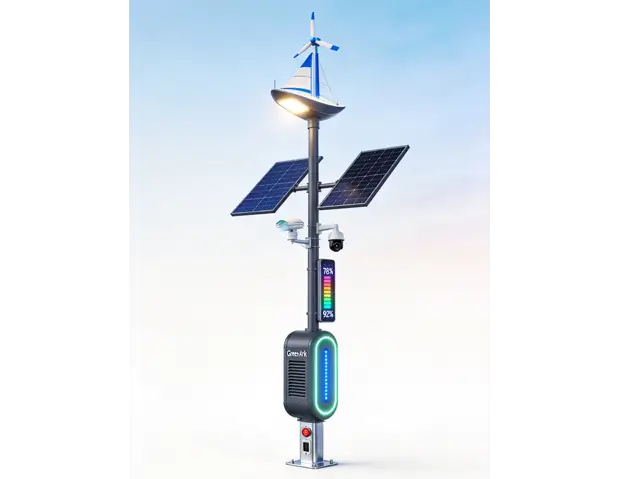
A buyer choosing a wind solar hybrid street light manufacturer should first decide whether the project is a utility-style smart pole project, a scenic public-space project, or a standard lighting project that does not need wind and smart functions. AilumPower’s AP-SSL-WSH-ES-GA and AP-SSL-WSH-ES-LOTUS both combine solar, wind, energy storage, lighting, and smart functions, but they are not the same product. GA is stronger for road and smart-infrastructure planning, while LOTUS is more suitable for scenic, landscape, or public-facing spaces.
The first item to confirm is the site purpose. If the buyer only needs a lamp head, an integrated solar lamp head or mains-solar hybrid lamp head may be simpler. Wind-solar hybrid smart street lights belong where energy diversity, public functions, communication, and visible design are part of the project.
Hybrid street lighting research often discusses wind and solar together because the two energy sources can complement each other in some outdoor conditions. In real procurement, however, the buyer should not treat wind input as a magic add-on. The site still needs solar exposure, wind conditions, battery storage, controller logic, pole design, and maintenance access. AilumPower’s GA and LOTUS routes make this clear because each product combines renewable input with storage and public functions in a different way.
GA is a smart infrastructure product. LOTUS is a scenic smart pole product. Both are wind-solar hybrid street lights, but their best applications are different. A buyer comparing manufacturers should ask whether the project wants road coverage, screen visibility, monitoring, public-space design, or a decorative landmark effect.
AP-SSL-WSH-ES-GA uses bifacial monocrystalline 200W solar PV, a 300W vertical-axis micro wind turbine, and AilumPower HZS-100-16S stacked 51.2V/100Ah energy storage. It also includes an 80W warm white 3000K LED head, a P3 320 x 640mm vertical LED screen, a 400W HD PTZ camera, environmental monitoring sensors, 4G/5G plus RS485 communication, and USB plus wireless charging. Those details fit projects where lighting, monitoring, communication, and public information share one pole.
AP-SSL-WSH-ES-LOTUS uses lotus-shaped 150W solar panels, AilumPower HZP Series 25.6V/100Ah storage, and a 100W artistic spiral micro wind turbine. It includes a 50W center warm white LED, color-changing petal ambient lighting, a P4 compact LED screen, PTZ camera, holiday mode, and scenic lighting logic. A buyer planning a park entrance, cultural walkway, scenic road, or plaza should compare LOTUS as a public-space object, not only as a light source.
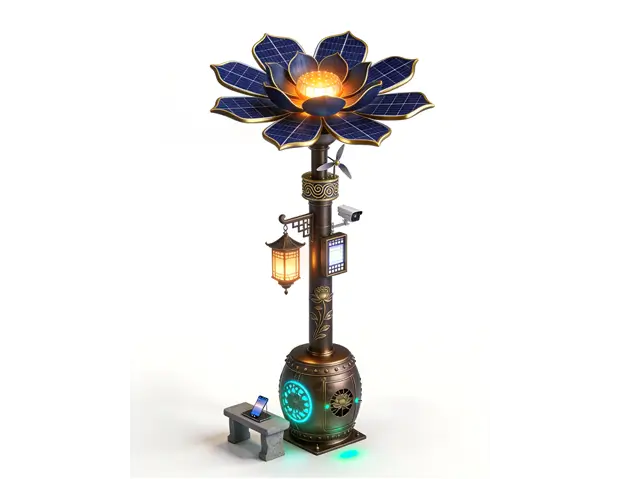
A buyer may see solar panels and a turbine and assume the system is automatically more reliable. A more careful review asks whether the site gives the product enough sun and wind to justify the route. GA uses a 200W bifacial solar route and a 300W turbine, while LOTUS uses 150W lotus-shaped solar panels and a 100W artistic turbine. Those differences matter because the public function load also differs.
The battery route should be reviewed with the same care. GA uses AilumPower HZS-100-16S stacked 51.2V/100Ah storage, while LOTUS uses AilumPower HZP Series 25.6V/100Ah storage. A buyer should match storage with the expected lighting hours, camera use, display use, communication functions, and seasonal energy conditions.
A contractor installing hybrid poles along a road with limited wind exposure should not rely on the turbine line alone. The battery and PV route still carry much of the operating responsibility. For GA, the 200W PV route and 51.2V/100Ah stacked storage are part of the same decision. For LOTUS, the 150W solar panels and 25.6V/100Ah storage should be reviewed with the scenic lighting modes and screen use.
GA includes a P3 vertical LED screen, HD PTZ camera, environmental monitoring sensors, and communication routes. LOTUS includes a compact screen, PTZ camera, ambient lighting, and scenic display modes. These functions should be specified before production because they affect power planning, pole placement, public viewing angle, and maintenance access. A buyer who approves only “wind solar hybrid street light” may miss the actual smart functions that make the product useful.
A city-road project may use GA near intersections, entrances, industrial parks, or public roads where monitoring and information display are useful. A park or scenic walkway may use LOTUS where appearance, ambient color, and landscape identity matter. Both products require a smarter project file than a standard lamp head order.
GA and LOTUS are both visually distinctive products, but a buyer should not approve either route only from appearance. GA should be reviewed when the project needs stronger public infrastructure functions: a larger vertical screen, HD PTZ camera, environmental monitoring, communication, and a utility-style renewable pole. LOTUS should be reviewed when scenic design, ambient color, compact display, and public-space identity matter. The installation drawings should explain that difference.
A road authority may prefer GA for entrance roads or public-service zones because the product’s functions are easier to justify as monitoring and information infrastructure. A park operator may prefer LOTUS because it can become part of the landscape design. A factory may use GA near a gate or security zone but choose simpler lamp heads inside the site. These decisions should be written by zone.
A screen on a smart pole is not useful if nobody can see it. GA’s P3 320 x 640mm vertical LED screen and LOTUS’s compact P4 screen should be placed with viewing direction and pedestrian or driver movement in mind. The buyer should decide whether the screen is for public notices, wayfinding, advertising, scenic display, or project identity. That decision can change pole placement even when the lighting location would otherwise be acceptable.
Receiving records for GA and LOTUS should include more than model names. For GA, the receiving team should record the PV route, turbine route, storage route, LED light, screen, camera, sensor package, and communication route. For LOTUS, the record should capture the lotus solar panel route, artistic turbine, 25.6V/100Ah storage, center LED, ambient lighting, screen, and camera. Those records make later replacement and maintenance easier.
If a shipment includes both smart hybrid poles and ordinary lamp heads, the site team should store them separately. A hybrid pole package includes public-space functions that ordinary lamp heads do not have. Treating the shipment as one lighting product group can create confusion during installation and later service.
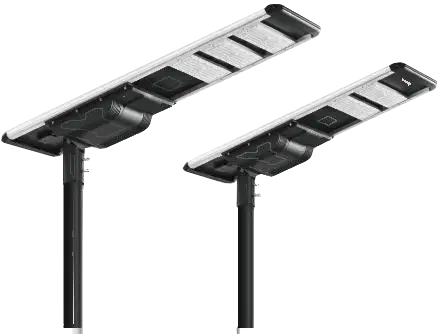
AP-MSCILH-PS Mains-Solar Hybrid Lamp Head should be compared when the buyer wants solar savings with mains-supported lighting but not necessarily wind input, smart screens, or public monitoring. It covers 60-70W through 140-150W power routes, LiFePO4 battery groups, SRNE MPPT controllers, 18V monocrystalline panels, IP65 protection, and 6-10m mounting height. That is a lamp head route, not a smart pole route.
AP-ISLH-CV and AP-ISLH-CL are also lamp head routes. They answer road, path, and park lighting needs with integrated solar products. If the buyer does not need wind, screens, cameras, or smart communication, a lamp head route may reduce cost, complexity, and service work.
| Project need | AilumPower route | Product details to keep visible | When not to choose it |
|---|---|---|---|
| Smart road pole with monitoring and display | AP-SSL-WSH-ES-GA | 200W PV, 300W wind turbine, 51.2V/100Ah storage, 80W light, P3 screen, camera | When the project only needs a simple lamp head |
| Scenic or cultural public-space pole | AP-SSL-WSH-ES-LOTUS | 150W lotus solar panels, 100W turbine, 25.6V/100Ah storage, ambient lighting | When the buyer wants utility-style road monitoring |
| Road lighting with mains support | AP-MSCILH-PS | 60-150W routes, LiFePO4 battery groups, MPPT controller, 6-10m mounting | When wind and smart public functions are required |
| Integrated solar lighting only | AP-ISLH-CV or AP-ISLH-CL | 10W to 120W routes, battery and panel matched by model | When camera, screen, or wind input is part of the project |
A wind-solar hybrid smart street light should not be selected just because the phrase sounds advanced. If the project is a narrow path, a basic park road, or a factory branch road with no camera, screen, sensor, or public display requirement, an integrated lamp head may be easier to install and maintain. If the site has grid support and the buyer mainly worries about lighting continuity, AP-MSCILH-PS may be a more direct route.
A hybrid smart pole becomes the better choice when the project needs more than light: public information, monitoring, environmental sensing, public-space identity, or a visible renewable-energy demonstration. The buying file should name that extra purpose. Otherwise the supplier discussion can drift into expensive features that do not solve the real site problem.
GA and LOTUS add functions that require a different maintenance plan from ordinary solar lights. The project team should know who will check the PV surfaces, turbine condition, battery storage, LED light, display, camera, sensors, communication route, and public-facing appearance. A simple lighting maintenance team may be comfortable replacing lamp heads but not checking smart pole screens or communication modules.
For GA, the maintenance plan should consider the 200W PV route, 300W turbine, 51.2V/100Ah storage, PTZ camera, environmental sensors, and display. For LOTUS, the plan should consider the lotus-shaped panels, artistic turbine, 25.6V/100Ah storage, ambient lighting, compact display, and scenic modes. If the buyer cannot maintain those functions, a simpler lamp head route may be the better purchase even if the hybrid pole looks more impressive.
A buyer should not build one generic spare-parts list for both GA and LOTUS. The two products have different energy input, storage, lighting, display, and appearance roles. The spare-parts plan should match the selected route so a later service order does not request a part that belongs to the other smart pole family.
The installer should also record which functions were activated at the site. A pole may include display, camera, sensor, and communication functions, but the project owner may use only part of that capability at launch. If a later team sees unused hardware without a record, it may misread the system condition. A clear function record prevents that confusion.
Hybrid poles are best approved when the buyer can name the job each function performs. Lighting provides the basic public-space value. The battery and renewable input support operating time. The camera supports monitoring. The screen supports public information or visual identity. The sensor route supports environmental data. When those jobs are written down, the manufacturer route becomes easier to justify and maintain.
This also keeps the buyer from over-specifying a quiet road that only needs lighting, or under-specifying a public area that needs camera and display functions from the start.
The clearer the function list, the easier it is to defend the smart pole route during budget review.
