

Get quote
Get Free Consultation!
We are ready to answer right now! free consultation.
Email:ttxxkj888@gmail.com
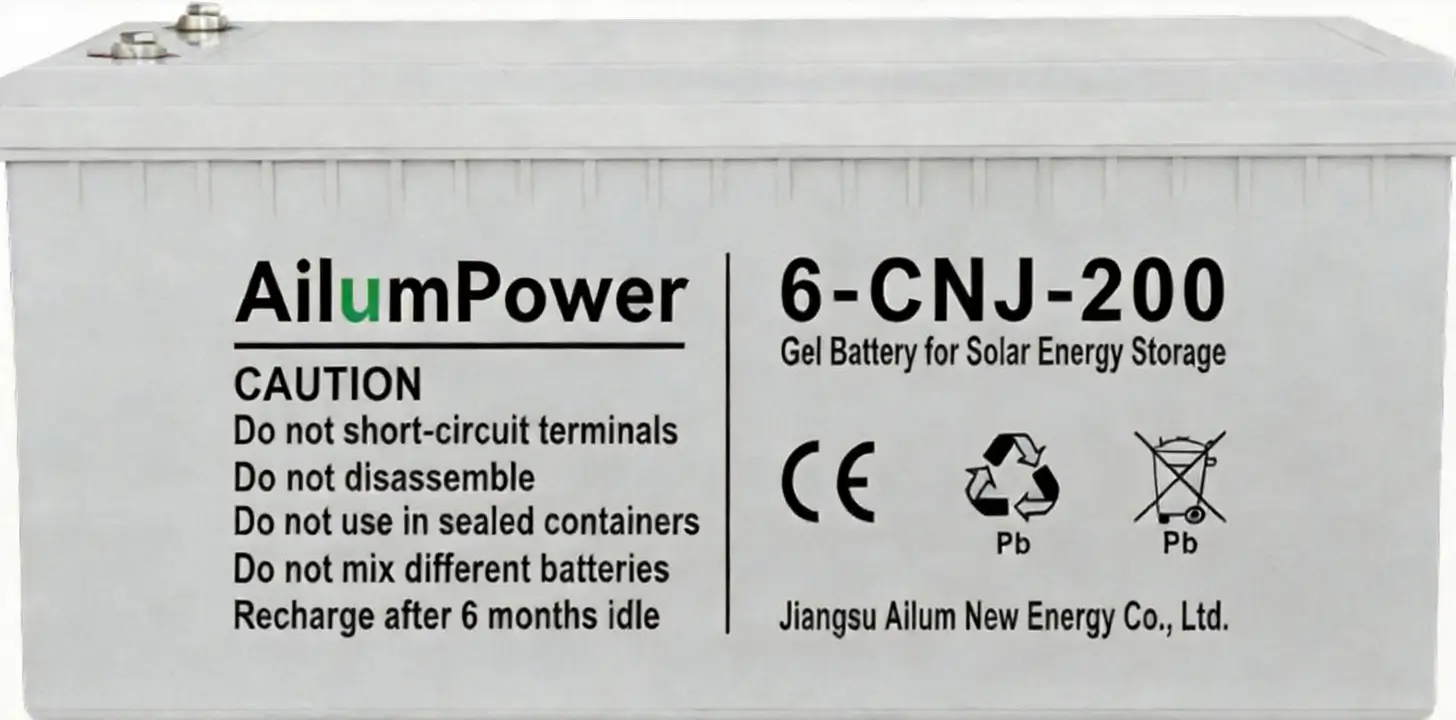
Gel battery storage and charge voltage matter most for buyers who hold batteries before installation, supply replacement stock, or ship mixed 12V capacities for solar lighting, UPS, telecom, and renewable standby systems. AilumPower’s 12V gel battery range includes 12V100AH, 12V150AH, 12V200AH, and 12V250AH options that share important charging rules but differ sharply in weight, case size, and field handling.
The first thing to confirm is whether the buyer is sizing a new project, replacing an existing battery, or stocking batteries for later service. The same charge voltage can appear across the range, but a 30kg 12V100AH battery and a 65.5kg 12V250AH battery create very different receiving and installation plans.
AilumPower’s 12V gel battery data lists float charge voltage of 13.5V-13.8V and equalize voltage of 14.4V-14.8V. It also lists maximum charge current no more than 0.25C10 and self-discharge no more than 3% per month at 25C. These values are not decoration in a specification table. They tell the buyer how the battery should be managed before installation and how the project should avoid damaging standby stock through careless storage.
For a distributor, the purchase file should keep those values visible for the warehouse and service team. If batteries are stored for several months before being sent to pole bases, telecom cabinets, UPS rooms, or renewable backup sites, storage records become part of product quality. A buyer should know when goods arrived, where they were stored, and which battery capacity went into which project zone.
The 12V100AH Gel Battery has 12V rated voltage and 100Ah rated capacity at 10hr, 1.80V/cell, 25C. It weighs 30kg and measures 405 x 173 x 231mm. This is the easier capacity to handle for smaller backup cabinets, compact solar lighting storage, and replacement work where crews need a manageable battery.
The 12V150AH Gel Battery increases capacity and handling demand. It weighs 40.1kg and measures 482 x 171 x 240mm. The product data lists a temperature range of discharge -45C to 50C, charge -20C to 45C, and storage -30C to 40C. That makes it useful for medium-runtime lighting and standby projects, but the buyer should still check cabinet fit and lifting conditions before approving bulk quantities.
The 12V200AH Gel Battery weighs 55.5kg and measures 525 x 240 x 219mm. The 12V250AH Gel Battery weighs 65.5kg and measures 525 x 268 x 220mm. These higher capacities may be correct for longer runtime or larger standby duty, but they should not be treated as simple upgrades. A field crew that can safely replace a 30kg battery may need different equipment or team planning for batteries above 55kg.
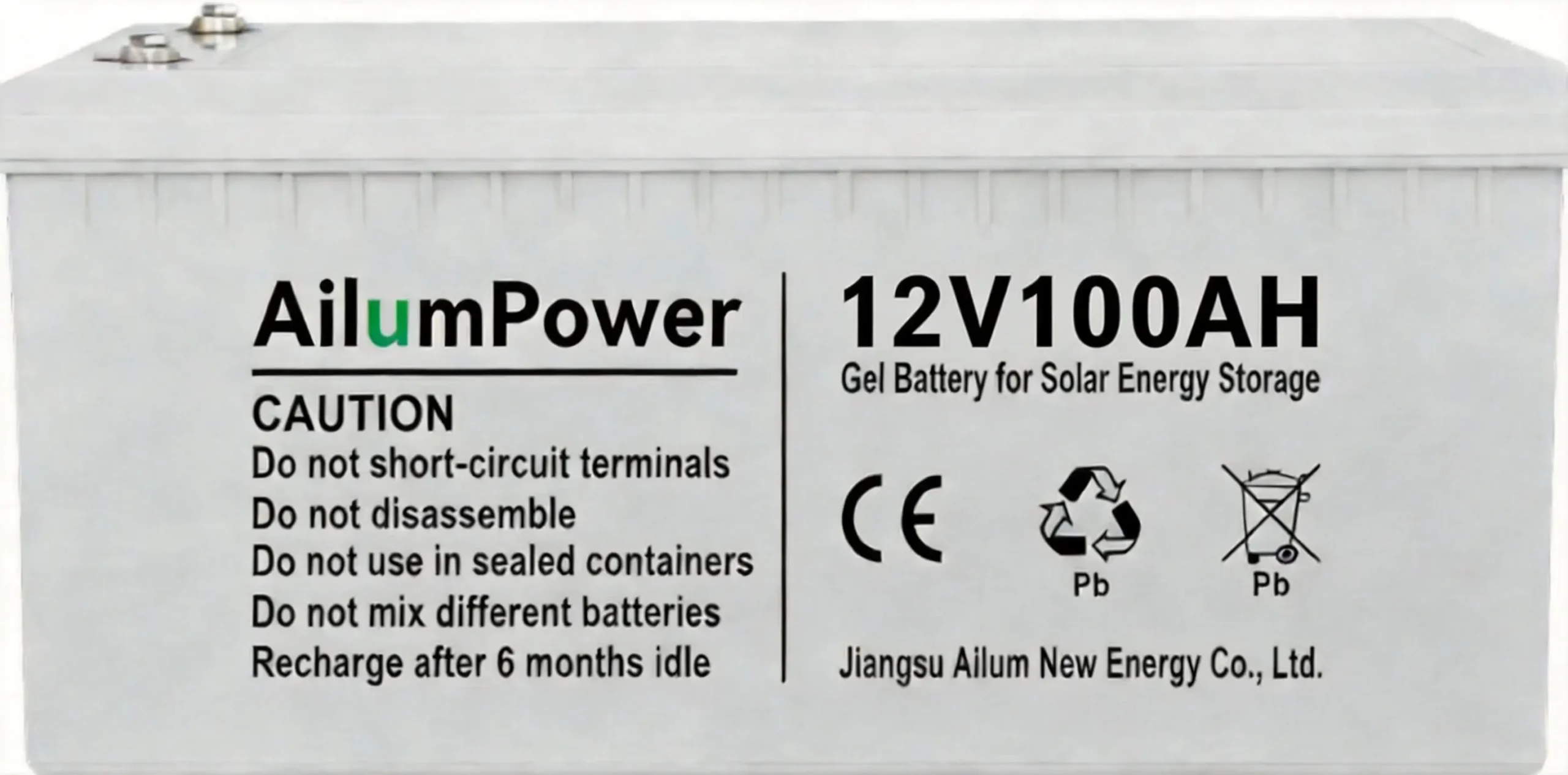
A solar lighting buyer may use separate gel batteries, integrated lamp heads, or hybrid smart street lights. The battery decision should follow that route. If the project uses pole-base gel batteries, then the buyer should compare 12V100AH, 12V150AH, 12V200AH, and 12V250AH by runtime, cabinet size, lifting, storage time, and charge management. If the project uses an integrated lamp head such as AP-ISLH-CV, the lithium battery is part of the lamp head specification and should not be replaced with a gel battery unless the whole system design supports that change.
A maintenance team replacing batteries in older outdoor lighting should also check whether the old battery capacity was chosen for actual night duty or simply because it was available. A 12V250AH battery may provide longer stored energy, but if the pole base cannot fit it, if the crew cannot handle the weight, or if the controller route is not suitable, a larger battery becomes a service problem rather than an upgrade.
| AilumPower gel battery | Useful buyer check | Where it fits | Risk to avoid |
|---|---|---|---|
| 12V100AH | 30kg, 405 x 173 x 231mm | Smaller solar lighting, UPS, telecom, and backup sites | Using it where longer runtime is required |
| 12V150AH | 40.1kg, 482 x 171 x 240mm | Medium-runtime standby and lighting storage | Ignoring cabinet fit and handling weight |
| 12V200AH | 55.5kg, 525 x 240 x 219mm | Longer standby and off-grid lighting work | Assuming every field crew can lift and replace it safely |
| 12V250AH | 65.5kg, 525 x 268 x 220mm | High-capacity backup where space and handling are planned | Choosing capacity without checking enclosure space |
For gel battery storage and charge voltage control, the receiving team should record arrival date, capacity, carton condition, terminal condition, visible case condition, and storage location. The warehouse should separate 100Ah, 150Ah, 200Ah, and 250Ah batteries so a later replacement order does not pick the wrong capacity from a mixed pallet. The product label should remain visible after storage, not hidden by repacking or stacked goods.
If a buyer is supplying multiple contractors, each shipment should list the capacity and project zone. A highway lighting maintenance order, a telecom backup order, and a UPS replacement order may all use 12V gel batteries, but the receiving team should not treat them as interchangeable. The same voltage does not mean the same size, weight, or service task.
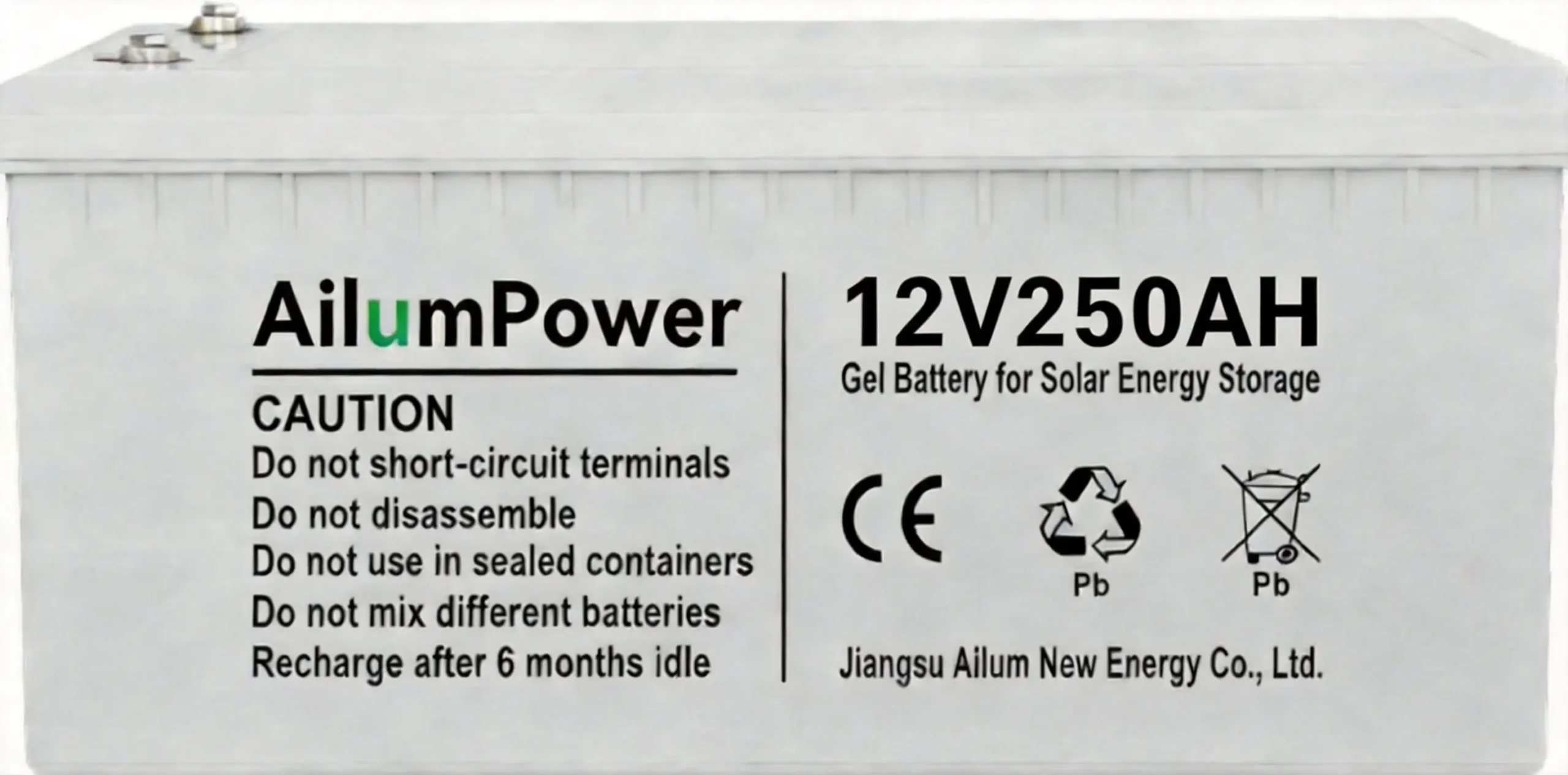
The charge voltage values should be passed beyond the purchase team. Float charge voltage of 13.5V-13.8V and equalize voltage of 14.4V-14.8V should be available to the installer or maintenance team that will connect the battery to the actual system. The max charge current no more than 0.25C10 should also be considered when selecting or checking the charging route.
For projects with long storage time, self-discharge no more than 3% per month at 25C helps the buyer plan inventory, but it does not remove the need for stock rotation and inspection. A distributor should avoid selling old stock without checking condition and storage records. A contractor should avoid mixing new and old batteries in the same replacement group unless the system design and service plan allow it.
Stock rotation matters when a buyer orders gel batteries before all pole bases, telecom cabinets, or UPS rooms are ready. Because the self-discharge value is listed as no more than 3% per month at 25C, the warehouse team should still record arrival date and storage location. The value helps planning, but it does not mean batteries can be ignored. A buyer holding 12V100AH and 12V250AH batteries in the same warehouse should use separate stock cards because the handling weight, case size, and field destination are different.
A contractor preparing a solar lighting project may receive batteries before the poles are installed. In that case, the project file should identify which battery capacities belong to each road or park area. The warehouse should not open or move cartons repeatedly just to check capacity. A clear receiving photo, label record, and capacity list can save time when installation finally begins. This is especially useful for mixed orders that include 12V150AH batteries for one zone and 12V200AH or 12V250AH batteries for another.
A replacement order should pause if the buyer cannot confirm the old battery capacity, enclosure size, terminal condition, charging route, or expected runtime. A 12V gel battery replacement may look simple, but using a larger capacity without checking space can create cabinet problems. Using a smaller capacity because it is available can reduce night operation or backup time. The buyer should also confirm whether the old system used separate gel batteries or whether the battery was part of an integrated lamp head product.
For maintenance teams, the most useful replacement record is often a site photo with the old label, battery box, controller, and surrounding space. That record can be matched to AilumPower product data before the order is placed. It also helps avoid unnecessary changes to the system. If the original project used a 12V200AH battery and the enclosure still fits that route, the buyer should have a reason before moving to 12V250AH or down to 12V150AH.
The float and equalize voltage values should be checked against the charging equipment used in the actual project. A battery buyer does not need to become a charger designer, but the purchase team should make sure the installer or system integrator has the correct values before connection. Float charge voltage of 13.5V-13.8V and equalize voltage of 14.4V-14.8V should appear in the technical file for the battery group. If the project uses several capacities, the file should make clear that each battery group is still part of the same 12V gel battery charging family while the capacity and handling requirements differ.
For solar lighting projects, the controller discussion should be tied to the lighting route. A separate gel battery project needs storage and charge management records for the battery box. An integrated solar lamp head project needs the lamp head specification checked instead. A buyer who mixes these two approaches may create a replacement problem later, because a gel battery cannot be swapped into a product where the lithium battery is built into the lamp head design.
Weight is not a minor detail for gel battery procurement. A 12V100AH battery at 30kg can often be handled differently from a 12V200AH battery at 55.5kg or a 12V250AH battery at 65.5kg. The buyer should ask how batteries will be unloaded, stored, moved to the installation point, and lifted into cabinets or pole bases. If the project site has stairs, soft ground, or long carrying distance, the larger capacity may still be correct, but the handling plan needs to be part of the order.
Packaging labels should show the capacity clearly enough that workers do not need to open cartons repeatedly. This protects the goods and reduces wrong-site delivery. If a batch includes 12V150AH and 12V200AH batteries, the warehouse should not rely on carton size alone. The receiving record should include the product name and destination zone, because both products may be used in similar solar lighting or standby systems but should not be mixed after arrival.
After delivery, the buyer should keep the packing list, capacity schedule, storage record, and at least one clear label photo for each capacity. Those files help later when the same project needs replacement batteries or when a distributor receives a reorder from a contractor who only remembers the application, not the exact capacity.
This record is also useful when several 12V capacities are stored in one warehouse.
A good gel battery purchase file does not stop at capacity. It records charge voltage, maximum charge current, self-discharge, weight, dimensions, storage temperature limits when available, and the project route where each battery will be used. For solar lighting and backup buyers, that record makes later replacement easier and reduces the risk of sending the right voltage but the wrong capacity or case size to the site.
